.svg)


.svg)

.jpeg)


.png)
The UAE restaurant sector is expanding at a remarkable pace. The country's foodservice market is projected to grow from USD 23.21 billion in 2025 to USD 61.21 billion by 2031, and Dubai alone issued over 1,200 new restaurant licences in 2024. More outlets, more competition, and a more demanding customer base all raise the stakes for getting your operations right from day one.
However, the best POS system for restaurants in the UAE isn't chosen on paper. You feel the difference during service. When orders get stuck, modifiers are missed, refunds aren't tracked properly, or closing takes too long, it hits revenue, guest experience, and the team's pace.
Most POS debates in UAE restaurants aren't really about buttons and features; they're about where the friction sits during a busy shift, and how painful the close is when sales and settlements don't line up.
This guide covers 9 of the most commonly evaluated restaurant POS systems in the UAE today. With this guide, you will be better able to understand what each one does well, what type of operation it suits best, and where each one has limitations. By the end, you will have a clear framework for making the right choice for your restaurant.
What to Look for in a Restaurant POS System: A Buying Checklist
Before looking at any individual platform, get clear on what your operation actually needs. The best restaurant POS system is the one that solves your biggest daily operational challenge, not the one with the longest feature list.
Ask yourself: Does the system manage tables, split bills, and route orders to the kitchen? Does it generate VAT-compliant receipts automatically? Can you access reports in real time from any device? Does it fit the way your customers pay?
When it comes to payments, the expectation has shifted significantly. A 2025 Mastercard survey found that 68% of UAE consumers now prefer card or mobile payments over cash, and more than 75% of in-person transactions at major retailers are completed via tap-to-pay cards or mobile wallets. Choosing a restaurant POS system that handles digital and contactless payments seamlessly is no longer optional; rather it is a baseline expectation for any restaurant operating in the UAE today.
Before evaluating any system, use this checklist to identify what your operation actually needs. The clearer you are on your requirements, the faster you can filter out the wrong options and focus your demo time on what matters.
9 Best Restaurant POS Systems in the UAE
Now that you have a clear picture of what to look for, here are the nine best restaurant POS systems in the UAE to consider.
1. Fortis SmartPOS
Best for: Small and medium-sized UAE restaurants, cafes, and food trucks that want payments and POS in one device
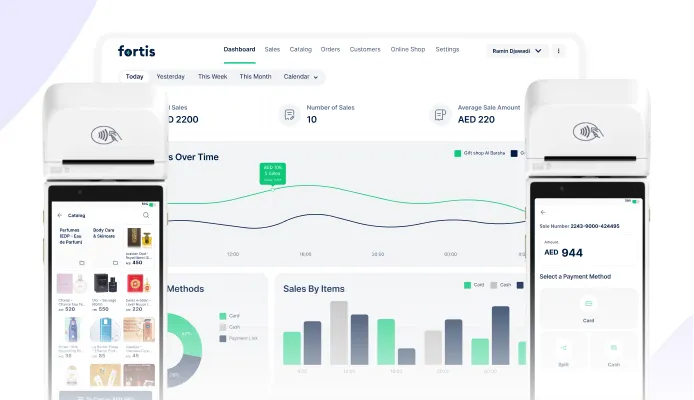
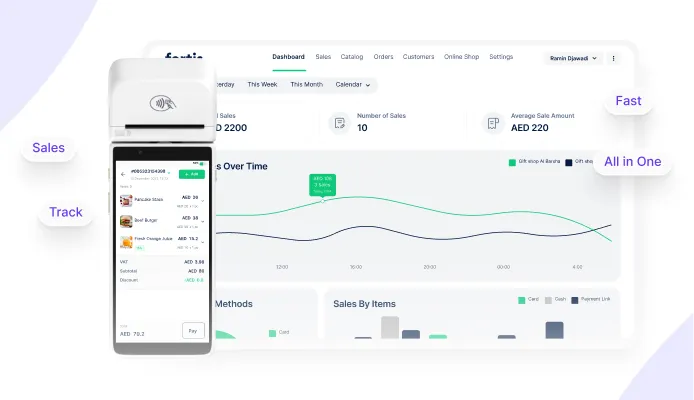
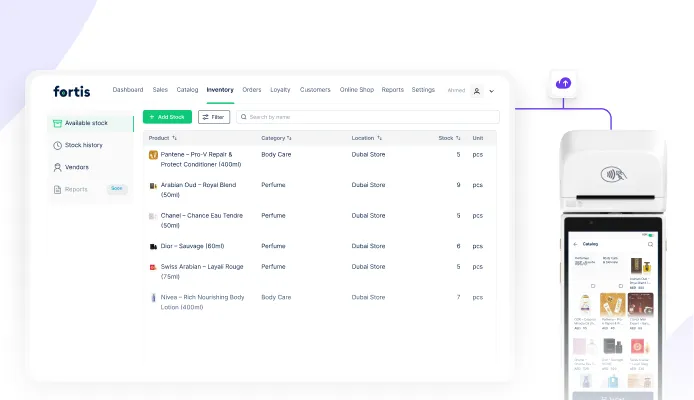
Fortis SmartPOS takes a different approach from the other systems on this list. Rather than running on a tablet alongside a separate payment terminal, Fortis converts your card machine into the POS itself. Orders, payments, customer data, and reporting all run from one device, which means that you have fewer devices on the floor, you can onboard. the staff faster and at the end of the day there is no reconciliation gap between your sales and settlement data.
Taking orders: Your team can access the full menu directly on the card machine, take the order, and send it to the kitchen. You can also record cash payments directly from the card machine and generate FTA-compliant VAT receipts automatically on every transaction.
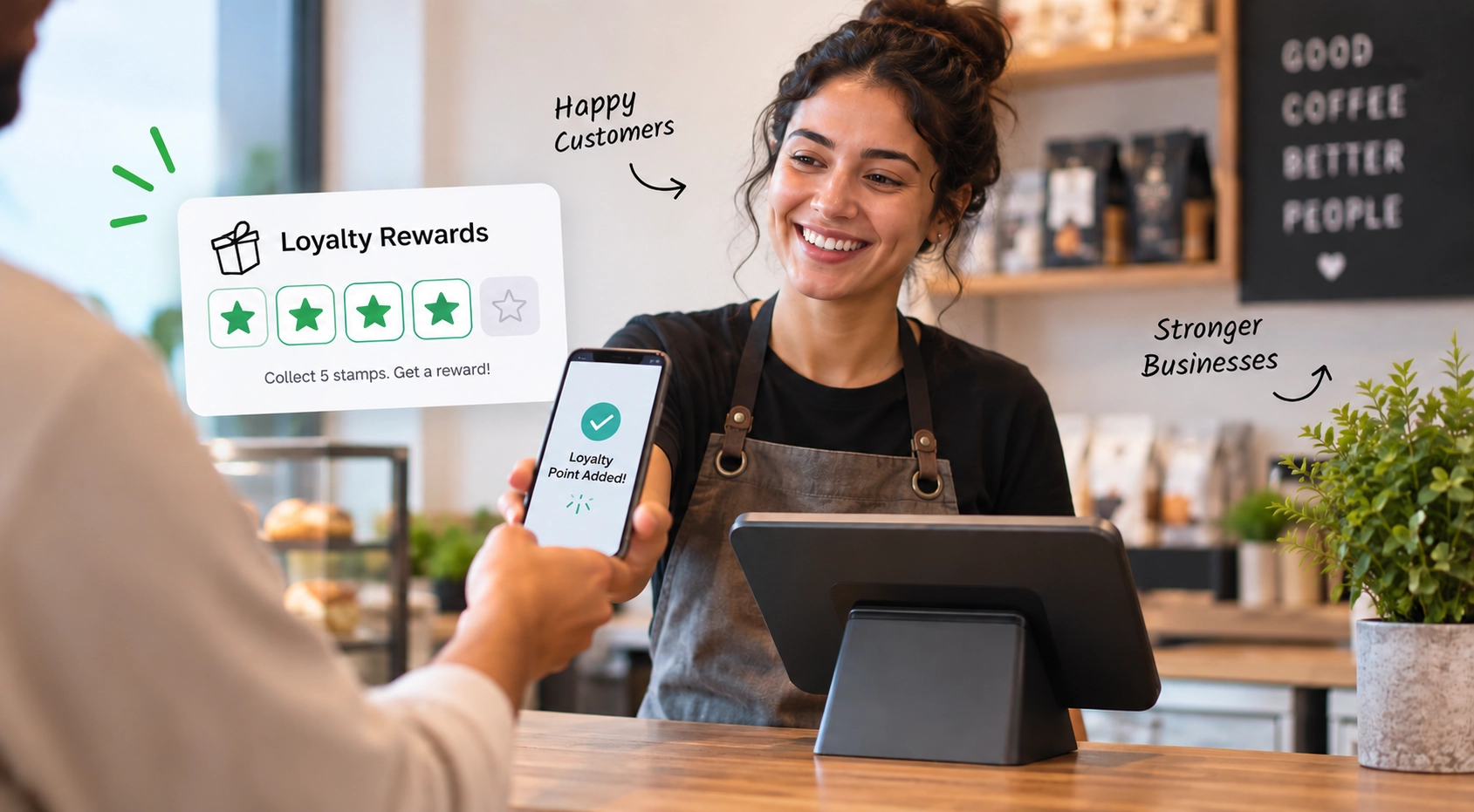
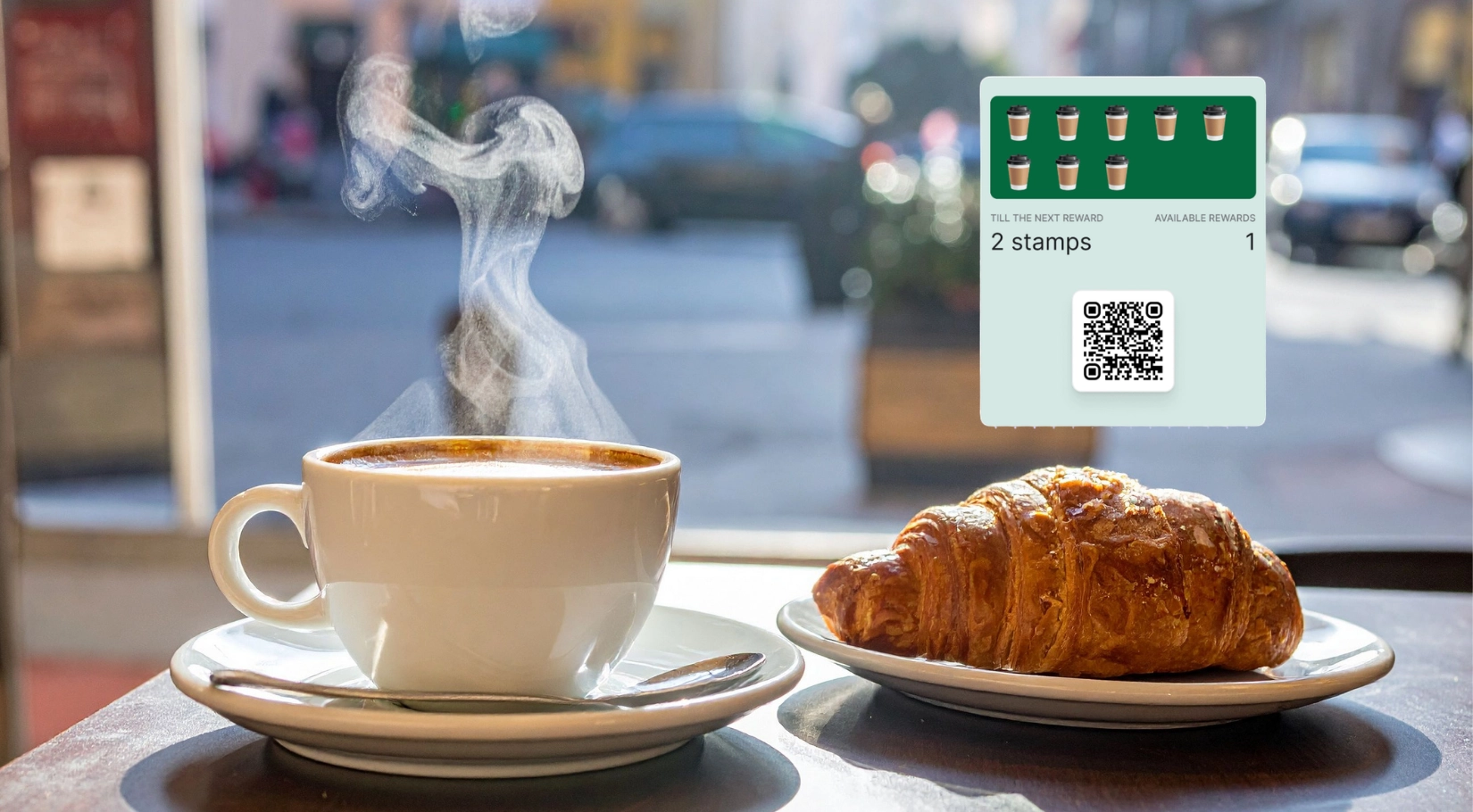
Customer loyalty: A 2025 Mastercard study found that UAE consumers who use digital payments are 40% more likely to participate in merchant loyalty programmes, and spend an average of 25% more per transaction than cash-paying customers. With Fortis SmartPOS, you can activate a digital loyalty programme that works directly from the card machine.
Staying on top of your business: Since POS and payments run on the same device, your sales and settlement data are always aligned. The Fortis cloud dashboard gives you real-time visibility into top-selling items, sales by staff member or location, and daily summaries, from wherever you are, on any device.
What to consider: Fortis SmartPOS is built for small and medium-sized food and beverage operations. If you are managing a large enterprise with complex supply chain requirements, consider pairing Fortis Table Pay with Foodics or Syrve.
2. Fortis Table Pay
Best for: Fine dining restaurants and table-service cafes in the UAE that want to upgrade the checkout experience without replacing their existing POS
Fortis Table Pay is a pay-at-table solution designed specifically for dine-in restaurants. It is not a standalone POS, rather it works as an additional layer on top of Foodics or Syrve, which means it is built for restaurants that are already running one of those systems and want to improve the part of the dining experience that matters most to their guests: the moment they ask for the bill.
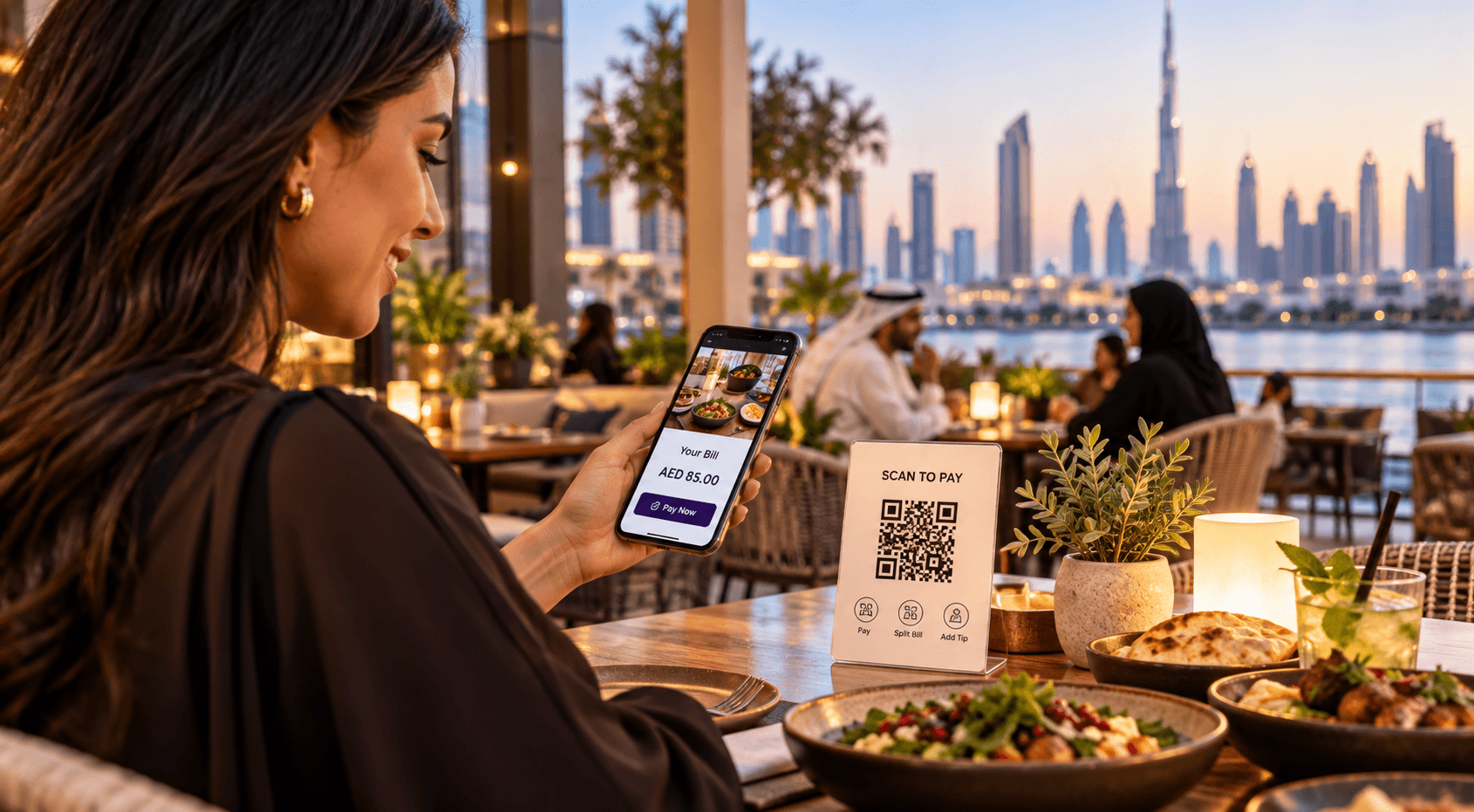
Here is how it works. When guests are ready to pay, they scan a QR code placed on their table to access the digital menu and their bill directly on their phone. From there, they can split the bill by item or by the number of people at the table, add a tip, and pay.
If your team is handling the payment instead, they can enter the table number on the Fortis card machine, view the items ordered, split the bill, record the tip, and accept card or cash from the same device. Once payment is completed, the table closes automatically in Foodics or Syrve. No manual update required.
Key features include: QR-based digital menu access, bill splitting by item or equally, seamless tip capture built into the payment flow, instant Google review prompt after payment, and automatic table closure in Foodics or Syrve upon completion.
What to consider: Fortis Table Pay currently works with Foodics and Syrve only. It is the right choice if your restaurant is already on one of those systems, or if you are setting up on Foodics or Syrve and want to include a modern checkout layer from day one.
3. Syrve
Best for: Multi-location restaurant groups and operators who need enterprise-level automation and deep operational control
Syrve is a Dubai-headquartered restaurant management platform that operates across more than 57 countries. What distinguishes Syrve from most systems on this list is the depth of automation it offers. Its AI forecasting engine analyses historical sales data, time of day, day of week, and seasonal patterns to give operators an accurate projection of expected revenue and order volumes. For a restaurant group managing purchasing across multiple kitchens, this reduces both overstocking waste and the risk of running short during a busy period.
Key features include: AI-powered sales and procurement forecasting, delivery aggregator integration with platforms such as Talabat, UberEats, and Deliveroo, kitchen display system, loyalty programme, staff management, real-time multi-branch dashboards, and a mobile waiter app for tableside ordering.
To upgrade your restaurant's checkout experience, you can combine Syrve with Fortis Table Pay through the Fortis Syrve integration. The combination lets guests view the bill, split, tip, and pay from their phone while staff can also manage payments, tipping, and bill splitting from the card machine. Since it syncs with Syrve, the table closes automatically on the Syrve POS once payment is complete.
What to consider: Syrve is built for operational complexity. Single-location cafes or smaller restaurants that do not require enterprise-level automation may find it more system than they need at their current stage.
4. Foodics
Best for: UAE and GCC restaurants that need a locally-built platform with strong Arabic support and delivery integration
Foodics is one of the most widely adopted restaurant POS systems across the Middle East. Built specifically for the GCC market, it addresses operational and compliance requirements that internationally-developed systems often miss.
The platform offers a bilingual Arabic and English interface — a practical advantage in UAE restaurants where kitchen staff and management may work in different languages. Kitchen tickets can display in Arabic while receipts print in English for guests. It also supports local tax compliance and integrates directly with major delivery platforms such as Talabat and Deliveroo. This is particularly relevant given that the UAE's online food delivery market is projected to reach USD 1.8 billion by 2033, growing at a 10.2% CAGR.
Key features include: inventory control, CRM, staff management, table reservations, delivery management, kitchen display integration, and a marketplace of third-party app connections. If you are using Foodics or plan to, you can pair it with Fortis Table Pay to upgrade your checkout experience.
What to consider: Foodics is a comprehensive platform built to scale. If you have a smaller, single-location café, you may find the full feature range broader than what you need at the outset.
5. Sapaad
Best for: Delivery-first restaurants, cloud kitchens, and operators who want a simple, cross-platform system
Sapaad is a UAE-based cloud POS built specifically for the foodservice industry. It runs on any device with a browser whether it is a smartphone, tablet, laptop, or desktop, which means you are not tied to specific hardware.
Sapaad has built its reputation particularly among delivery-focused operations and restaurants managing high online order volumes. Its integrations with Talabat, Deliveroo, and Zomato bring all delivery orders into one interface automatically. With more than 70% of all food delivery transactions in the UAE now completed through mobile phones, the ability to consolidate multiple delivery channels into a single view has become a meaningful operational advantage during busy service periods.
Key features include: online ordering, aggregator integrations, kitchen display system support, inventory management, loyalty tools, QR-based table ordering, and integrations with accounting platforms such as Xero and Tally.
What to consider: Sapaad's strengths are in delivery, QSR, and operational simplicity. However, its dine-in capabilities, specifically floor plan management and complex table workflows —are more limited compared to platforms designed for full table service restaurants.
6. Geidea
Best for: Small and medium-sized UAE and KSA restaurants that want payments and POS bundled together
Geidea is a UAE and Saudi Arabia-based fintech company that offers cloud POS software bundled with its payment acquiring services. For a restaurant owner who wants to avoid managing separate contracts for a POS software provider and a payment processor, Geidea presents a practical all-in-one commercial arrangement from a single regional provider.
Its setup is designed for speed, making it well-suited to operators who need to be up and running quickly. It covers core POS requirements including inventory, staff management, and QR payment capabilities, and its background as a payments company means card acceptance, digital wallets, and settlement are tightly integrated from day one.
Key features include: cloud POS, QR payments, e-commerce payment support, inventory management, and staff management.
What to consider: As a newer entrant to the full POS market, Geidea's restaurant management features are still developing compared to more established F&B-specific platforms such as Foodics or Sapaad. Operators with complex menu management, kitchen workflow, or multi-branch reporting requirements may find the current feature set limited.
7. Lightspeed
Best for: Medium to large restaurants and multi-location groups that need strong analytics and centralised operational control
Lightspeed is a globally deployed, cloud-native POS with a growing presence in the UAE and GCC. Its strongest differentiator for multi-location operators is the ability to push menu updates, price changes, and promotional campaigns from a central account to all branches simultaneously. It eliminates the manual, branch-by-branch updates that commonly create pricing inconsistencies as operations scale.
Its analytics capabilities are also a genuine strength. Rather than just showing what is selling, Lightspeed's reporting breaks down what is actually contributing to margin and gives you the commercial intelligence to make better decisions about your menu and operations.
Key features include: floor plan management, raw ingredient tracking and inventory management, menu optimisation tools, self-order kiosk support, delivery integration, advanced analytics, and multi-location management.
What to consider: Lightspeed runs on iPad only and does not support Android devices. It requires an annual contract commitment and has a more complex pricing structure, with additional costs for certain features. It is built for medium to larger operations.
8. Toast
Best for: Restaurant operators who want a restaurant-specific platform with strong kitchen and loyalty tools, and are comfortable with a system built outside the region
Toast is a US-based restaurant POS platform with a strong product reputation for restaurant-specific functionality. It covers the full operational flow starting from online ordering and delivery management through to kitchen display, payroll integration, gift cards, and contactless payments in a single platform designed exclusively for the food service industry.
Its loyalty and marketing tools are particularly well-regarded, and its multi-location management capability makes it a serious option for restaurant groups that are growing. For operators who have worked with Toast in other markets and are expanding into the UAE, the familiar platform and feature set offers operational continuity.
Key features include: online ordering, delivery management, kitchen display system, inventory management, loyalty programme, gift cards, contactless payments, payroll integration, and multi-location management.
What to consider: Toast was built for the US market and its UAE presence is currently limited. Local compliance features, Arabic language support, and regional support coverage are important considerations for UAE operators. Confirm these directly with the vendor before moving forward.
9. Square
Best for: Small restaurants and cafes looking for an accessible, easy-to-set-up system to get started
Square is a globally recognised name in payments and POS. For a small restaurant or café owner setting up for the first time, Square's core offering covers the essentials: payment processing, basic inventory, employee management, digital receipts, and order tracking.
Its accessibility is a genuine advantage. The interface is intuitive, setup is fast, and the barrier to entry is low, so it can be a practical starting point for operators who want to begin taking orders and payments without committing to a more complex platform from day one.
Key features include: payment processing, inventory tracking, employee management, menu management, tip management, digital receipts, mobile payments, and customer feedback tools.
What to consider: Square's UAE presence is limited. For restaurant owners who need robust local support, UAE VAT compliance built in, Arabic language capability, or advanced restaurant-specific features such as kitchen display integration, floor plan management, or delivery aggregator connections, the platform may not fully meet requirements. It is best suited to small, early-stage operations rather than growing restaurants.
Which POS System Is Right for Your Restaurant?
The right choice depends entirely on the stage and type of your operation. Use the table below as a quick selector, then read the relevant entry above for the full picture.
The restaurant POS system you choose will depend on the scale of your operations and the stage your restaurant is at. If you are opening a fine dining restaurant, you can go with Foodics or Syrve and pair it with Fortis Table Pay to elevate the guest experience. If you are running a small to medium-sized café or restaurant, Fortis SmartPOS is the most practical starting point.
Why Fortis SmartPOS Is the Right POS for Small to Medium Sized Restaurants in the UAE
Fortis SmartPOS is the right POS system for small and medium-sized restaurants, cafes, and food trucks in the UAE because it combines point-of-sale, payments, and customer loyalty into a single card machine, removing the operational complexity that most small restaurant owners deal with every day.
Unlike traditional setups that require a separate POS tablet, payment terminal, and loyalty app, Fortis SmartPOS runs everything from one device. Your team takes orders directly on the card machine, sends them to the kitchen through the Fortis kitchen bot, and accepts card, cash, or digital wallet payments without switching devices. Every transaction automatically generates an FTA-compliant VAT receipt, and all sales are synced to a real-time cloud dashboard so you always know how your business is performing.
For example, if you run a café with a drive-through, you can use Fortis SmartPOS to take orders at the drive-through and record cash payments on the spot from the card machine. And if you are opening a coffee shop, you can build customer retention from day one by enrolling customers into the loyalty programme directly from the card machine.
For small restaurant owners in the UAE who want to spend less time on admin and more time on their business, Fortis SmartPOS removes the friction that other systems leave behind.
How to Choose the Restaurant POS System in 30 Minutes
Frequently Asked Questions
1. What is the best POS system for a small restaurant in the UAE?
For a small restaurant or café owner, the best system is one where orders, payments, and reporting work together on as few devices as possible. Fortis SmartPOS runs everything from one card machine, with a cloud dashboard that gives you real-time visibility without the need to reconcile separate systems.
2. Do restaurant POS systems in the UAE generate VAT-compliant receipts?
Reputable systems operating in the UAE generate FTA-compliant tax invoices with VAT applied and itemised automatically on every transaction. This is a baseline requirement. Confirm it is included before signing with any provider and if the system is primarily designed for a market outside the UAE, verify this specifically.
3. What is the difference between a UAE-built POS and a global platform?
UAE-built or GCC-focused platforms like Foodics and Sapaad are configured for local tax compliance, Arabic language requirements, and direct integration with regional delivery platforms like Talabat and Deliveroo. Global platforms like Lightspeed, Toast, and Square can be capable solutions, but require additional verification that UAE-specific requirements are fully supported.
4. Can I add a loyalty programme to my restaurant POS?
Several systems offer loyalty features, either built in or through third-party integrations. Learn more about how a loyalty programme works and how Fortis Loyalty is embedded directly in the Fortis SmartPOS card machine so you can enroll customers, issue digital loyalty cards, and send personalised push notifications with no separate app required.
5. What is pay-at-table and do I need it?
Pay-at-table allows guests to view their bill, split it, tip, and pay from their phone by scanning a QR code at the table. It speeds up table turnover, increases tips, and improves the guest experience. Fortis Table Pay offers this capability as an add-on for restaurants running Foodics or Syrve.
6. What should I ask a POS vendor before signing?
Ask the vendor to run a live demo covering a full operational flow: take a table order with modifiers, split the bill, process a void, generate a VAT-compliant receipt, and export a daily sales report. If that flow is not smooth in the demo, it will not be smooth during a busy service. Also ask about UAE support hours and device replacement timelines.