.svg)


.svg)

.jpeg)


[[quicktips]]
If you run a shop, cafe, or service business in the UAE, you have almost certainly used a POS machine. A POS machine sits on the counter, a customer taps their card or phone, the payment goes through, and you get a receipt.The term POS machine, however, is often used interchangeably with POS system, and those two things are not the same. If you are starting your business, it is important to understand the difference to choose the right setup.
What Is a POS Machine?
Today, a POS machine has become indispensable for any UAE business considering 78% of UAE residents regularly use contactless payments.
A POS machine, short for point of sale machine, is the hardware device that processes customer payments at the moment of purchase. When a customer pays by debit card, credit card, Apple Pay, Google Pay, or another contactless method, the POS machine handles the authorization and settlement of that transaction.
In the UAE and across the GCC, the term is often used alongside "card machine," "payment terminal," or "swipe machine." They all refer to the same type of device.
At its core, a POS machine does three things: it reads the customer's payment method (card chip, tap, or QR code), sends the transaction to the payment network for authorization, and confirms the payment. Most machines print or send a digital receipt. In the UAE, the POS software layer usually generates the tax invoices, not the payment terminal itself. However, in certain cases you can also print it through the terminal itself if you have a software like Fortis SmartPOS installed.
How Do Businesses Get a POS Machine in the UAE?
In the UAE, POS machines are typically issued through banks or licensed payment acquirers. If you open a business bank account with a UAE bank, you can apply for a card machine through them. The bank connects your machine to a payment acquirer, which is the company that processes card transactions on your behalf.
The most widely used payment acquirer in the UAE is Network International, which supplies card machines to most of the merchants across the country. Other acquirers include Magnati and ADCB Merchant Services, etc.
Important: Accepting card payments requires a company bank account. You cannot simply plug in a card machine. You will need to apply through your bank, or the acquirer, provide your trade licence, and agree to merchant service fees. Once approved, the machine is set up and linked to your merchant account.
What Payment Methods Does a POS Machine Accept?
Most modern card machines in the UAE accept a wide range of payment methods. These include credit and debit cards, contactless tap-to-pay cards, Apple Pay, Google Pay, and Samsung Pay. Cash payments are typically handled separately and recorded within a POS system rather than processed by the card machine itself. Some terminals also support QR code payments and buy now, pay later options.
Contactless and mobile payments now represent a large and growing share of in-person transactions in the UAE, especially in retail and F&B environments. Supporting all three payment types, namely cash, card, and digital wallets, ensures you do not lose a sale.
POS Machine vs. POS System: What Is the Difference?
The term POS system and POS machine are often used interchangeably, however, a POS machine and a POS system are not the same thing, though they are related.
A POS machine is a payment device. It accepts the payment and confirms the transaction. That is where its job ends. A POS system, on the other hand, is a software that sits on top of the payment layer and gives you the tools to run your business such as manage your products or menu, track stock, record and analyse sales, and understand who your customers are.
Think of it this way: a POS machine is the checkout. A POS system is the entire back office. Most UAE businesses that are growing find they need both working together.
What Are the Limitations of a Basic POS Machine?
A card machine handles payment well. But if that is all you have, you will notice gaps quickly as your business grows.
No FTA-Compliant Tax Invoices
In the UAE, VAT-registered businesses are required to issue a tax invoice for every taxable supply. For most day-to-day B2C transactions, this is issued as a simplified tax invoice.A basic card machine typically prints a payment receipt, not a fully compliant tax invoice with itemised VAT and required business details. It does not itemise VAT at 5% or carry your TRN (Tax Registration Number). To meet FTA requirements, you need software that generates compliant invoices automatically on every sale.
No Inventory Visibility
When a customer buys something, the card machine records the amount paid. It does not know which product was sold, or how many you have left. For a retail business with dozens or hundreds of SKUs, this means you are reconciling stock manually, which takes time and creates errors.
No Sales Reporting
A card machine gives you transaction logs. A POS system gives you insights: what sold most today, which staff member processed the most orders, which product has the best margin. Without reporting, you are making decisions based on guesswork rather than data.
No Customer Records
Card machines do not capture customer information. You process the payment and the customer leaves. You have no way to follow up, build loyalty, or understand who your regulars are unless you have a separate system capturing that data at the point of sale.
End-of-Day Reconciliation Takes Time
If your POS machine and your sales records are separate, you spend time every evening matching them up. For a business with multiple payment types, including cash, card, and wallets, this is a real daily burden.
What Is a POS System and Do You Need One?
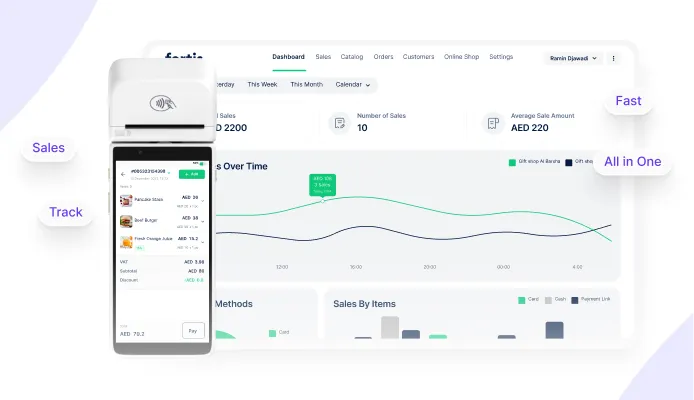
A POS system combines the payment function of a card machine with business management software. The idea is to give you everything in one place: payment processing, VAT-compliant invoicing, inventory tracking, customer records, and real-time reporting.
For UAE SMEs in food and beverage, retail, or services, a POS system matters from day one because without it, you will be mostly doing everything manually. Plus, if your business is VAT-registered, every sale requires an FTA-compliant tax invoice with VAT itemised at 5% and your Tax Registration Number (TRN) printed on the receipt. A basic card machine receipt does not meet this requirement. Your POS system must generate compliant invoices automatically on every transaction.
There are different types of POS systems available in the UAE:
Tablet-Based POS Systems
These run on an iPad or Android tablet placed at the counter, with a separate card machine for payments. They typically involve two devices and two data flows. Unless the systems are fully integrated, you may need to reconcile them at the end of the day.
Cloud-Based POS Systems
Cloud POS systems store all your data online. You can access your dashboard from any browser, on any device, whether you are in the store or not. This is the standard for modern POS platforms in the UAE because it removes the need for local servers and keeps your data backed up automatically.
Card Machine as POS (All-in-One)
A newer approach that is well-suited to UAE SMEs is software-based POS solutions that run directly on the card machine itself. Rather than requiring a tablet and a separate terminal, the POS software lives on the card machine. Your team takes orders, processes payments, and issues tax invoices from a single device. All data syncs to a cloud dashboard in real time.
How Does a Card Machine Connect to a POS System?
There are two ways a card machine connects to a POS system in practice.
Integrated: The card machine and the POS software are linked. When a sale is processed at the checkout, the amount is passed directly to the terminal. Payment confirmation comes back to the POS automatically. No manual entry. No reconciliation gap.
Semi-integrated or manual: The POS system and the card machine run separately. The cashier enters the amount on the terminal manually after the POS calculates the total. At the end of the day, you compare the two records to catch any discrepancies. This is more common with older setups and introduces avoidable errors.
For small and medium-sized businesses, an integrated setup is the better choice. It removes a step from every single transaction and ensures your sales and payment data match automatically.
Types of Card Machines Used in the UAE
Do You Need Just a Card Machine, or a Full POS System?
The answer depends on where you are in your business and what you need day to day.
Most UAE SMEs reach the point where they need a POS system well before they realise it. The good news is that some solutions, such as Fortis SmartPOS, are built specifically to close this gap by converting a standard card machine into a full POS system with no extra hardware required.
A Note for Restaurant and Cafe Owners
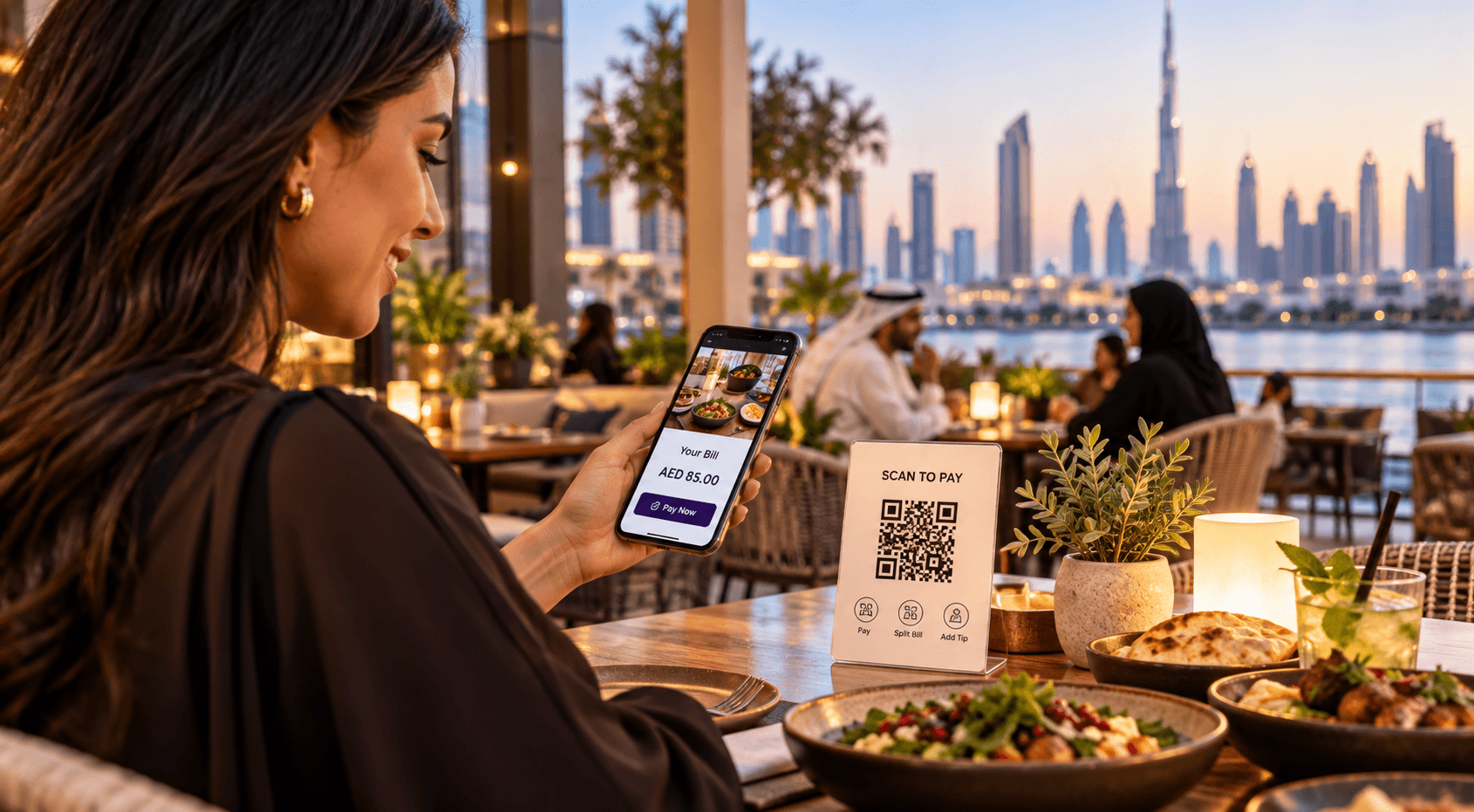
If you run a restaurant or cafe, your POS machine requirements go further than a standard retail setup. You need order management, kitchen routing, and bill splitting alongside your payment terminal. For fine dining restaurants that already use Foodics or Syrve, a solution like Fortis Table Pay adds QR-based bill viewing, tip capture, and pay-at-table capability on top of your existing system. Guests scan the QR code, view and split the bill, leave a review, and pay, all without waiting for a waiter. Waiters can also enter the table number on the card machine and see items ordered, and even do bill splitting and add tips from the card machine.
For smaller cafes and food trucks, a single-device POS system for food and beverage businesses that handles orders, payments, and reporting together is usually the more practical approach.
Convert Your Card Machine into a Full POS System With Fortis SmartPOS
Most businesses when starting out only opt for a card machine because it lets them accept card payments and POS systems are often expensive and require a high upfront cost because of the hardware. However, opting for a card machine often means that you end up doing most of the work manually such as tracking cash transactions, recording customer information, and have no insights into your sales or business performance.
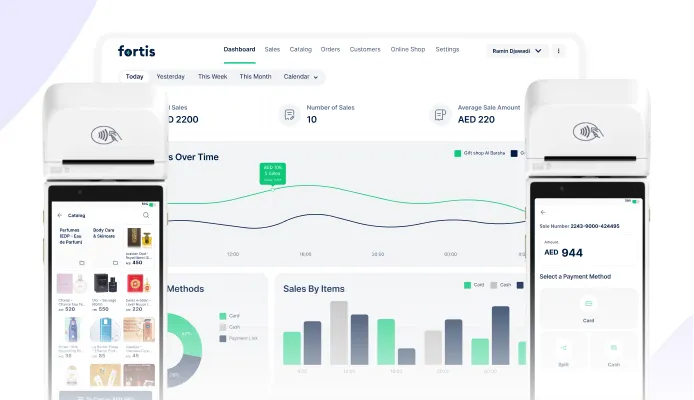
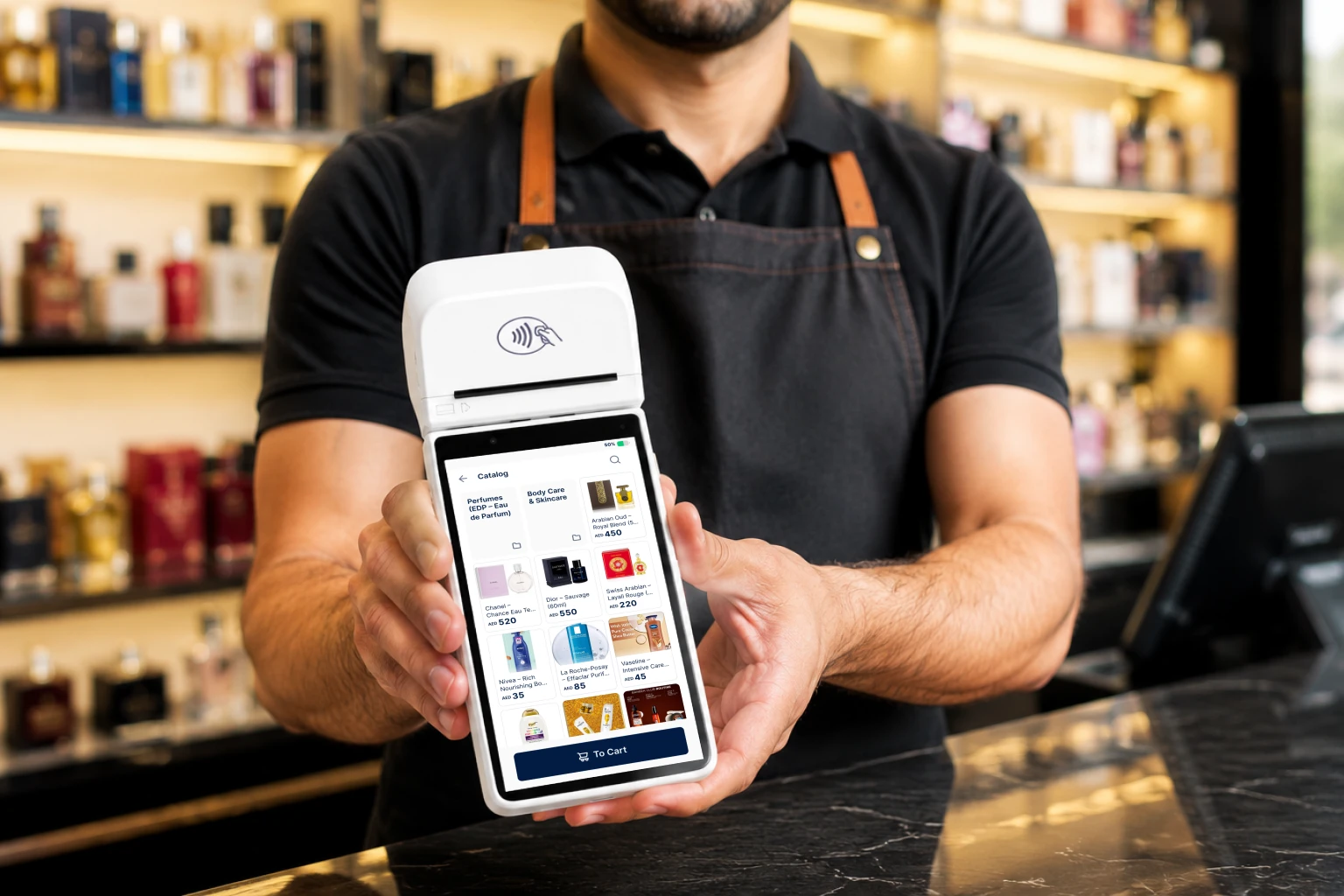
Fortis SmartPOS converts your card machine into a complete POS system, so you don't have to invest in expensive hardware and you have a complete POS solution from day one. Here is what you can do with your card machine with Fortis SmartPOS on it:
- Access your product catalog or menu
- Accept card and cash payments
- Capture customer information
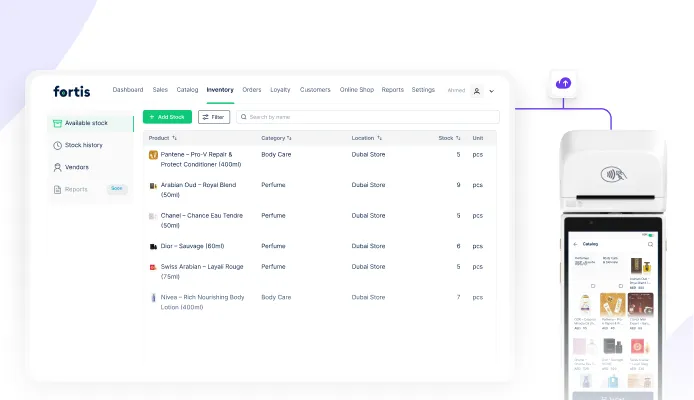
- Manage your inventory
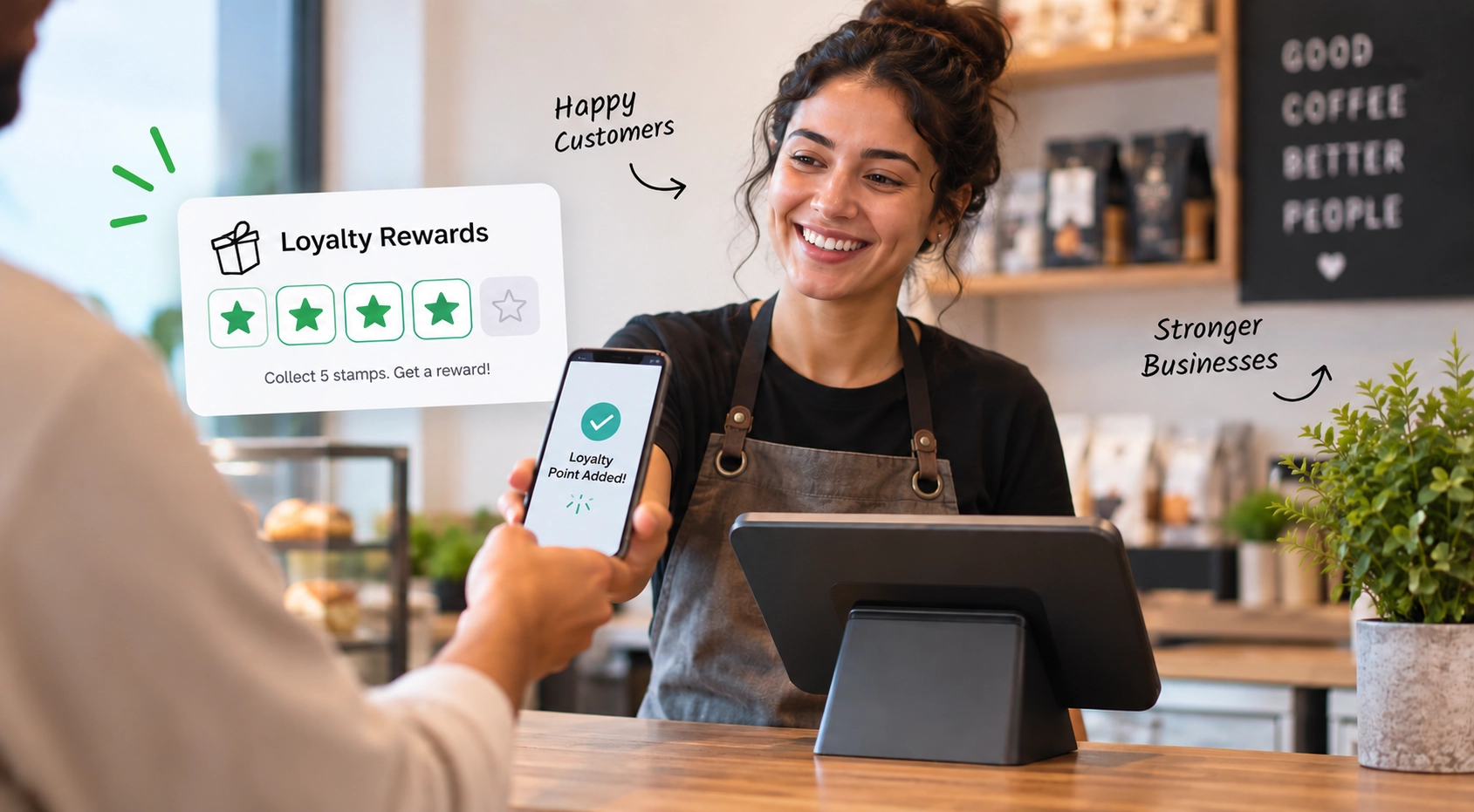
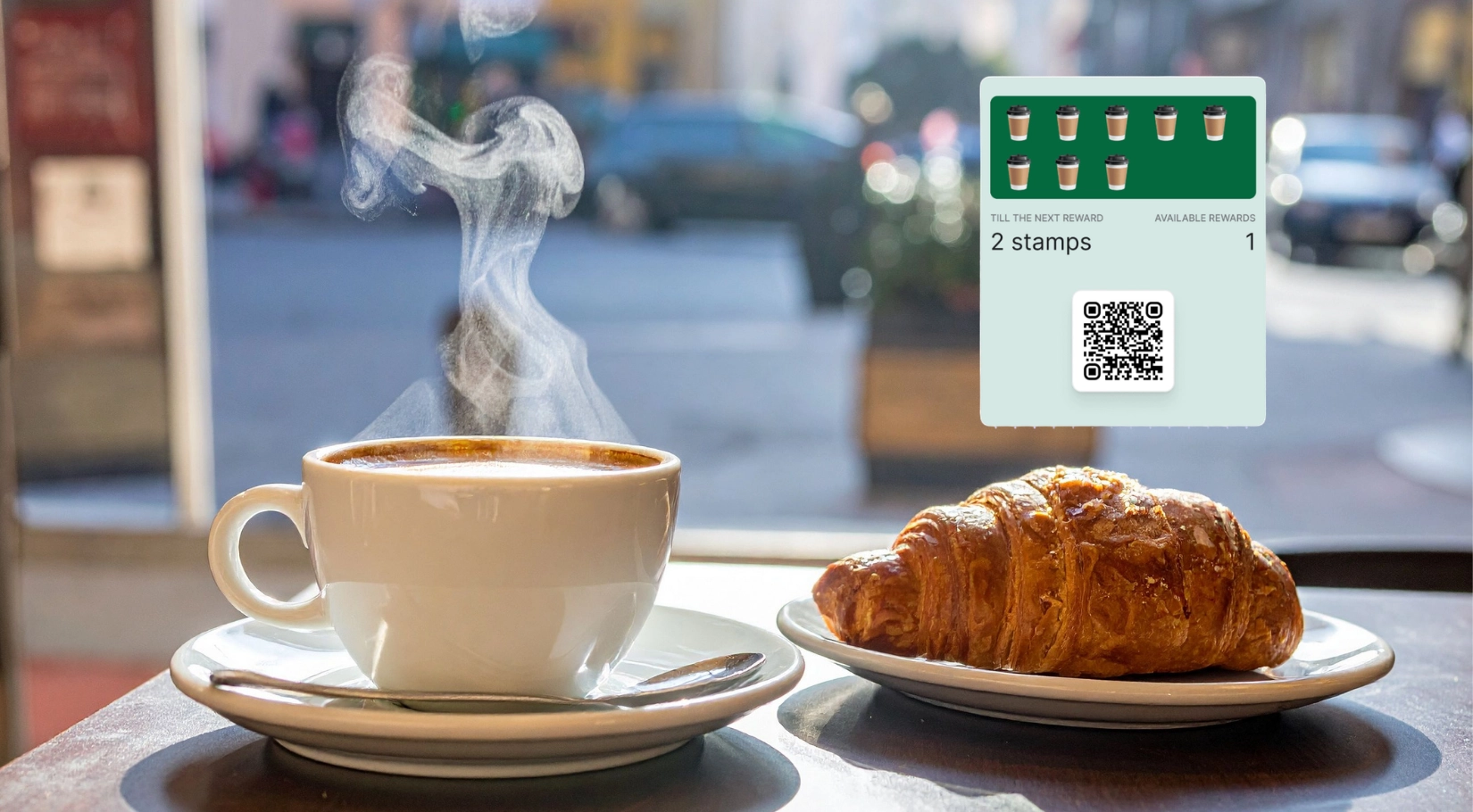
- Launch a loyalty program
- Print VAT invoices
Everything you do on your card machine syncs automatically to the Fortis online platform so you can manage your business from anywhere.
Frequently Asked Questions
What is the difference between a POS machine and a POS system?
A POS machine is the physical device that accepts card, cash, and mobile wallet payments. A POS system is the software platform that combines payment processing with inventory tracking, sales reporting, VAT-compliant invoicing, and customer management. Most growing businesses in the UAE need both working together.
How do UAE businesses get a card machine?
Card machines in the UAE are issued by banks or licensed payment acquirers, such as Network International. You apply with your trade licence, open a merchant account, and the acquirer sets up the terminal. There is a monthly merchant service fee applied to card transactions.
Does a POS machine generate VAT-compliant receipts in the UAE?
A basic card machine generates a payment receipt, not a tax invoice. For FTA compliance, your POS system must produce a tax invoice that itemises VAT at 5%, shows your Tax Registration Number, and includes the required transaction details. If you have Fortis SmartPOS installed on your card machine, you can print VAT invoices directly from it.
Can I convert my existing card machine into a POS system?
Yes. Solutions like Fortis SmartPOS work with Network International card machines, turning your existing payment terminal into a full POS system with cloud reporting and inventory management (available for retail businesses). Customer loyalty tools are available as an optional add-on.
What payment methods should a POS machine accept in the UAE?
At minimum, your POS machine should accept cash, credit and debit cards, and digital wallets including Apple Pay and Google Pay. The UAE has one of the highest rates of contactless payment adoption in the world, and customers increasingly expect to pay by tapping their phone or watch at the terminal.