.svg)


.svg)

.jpeg)


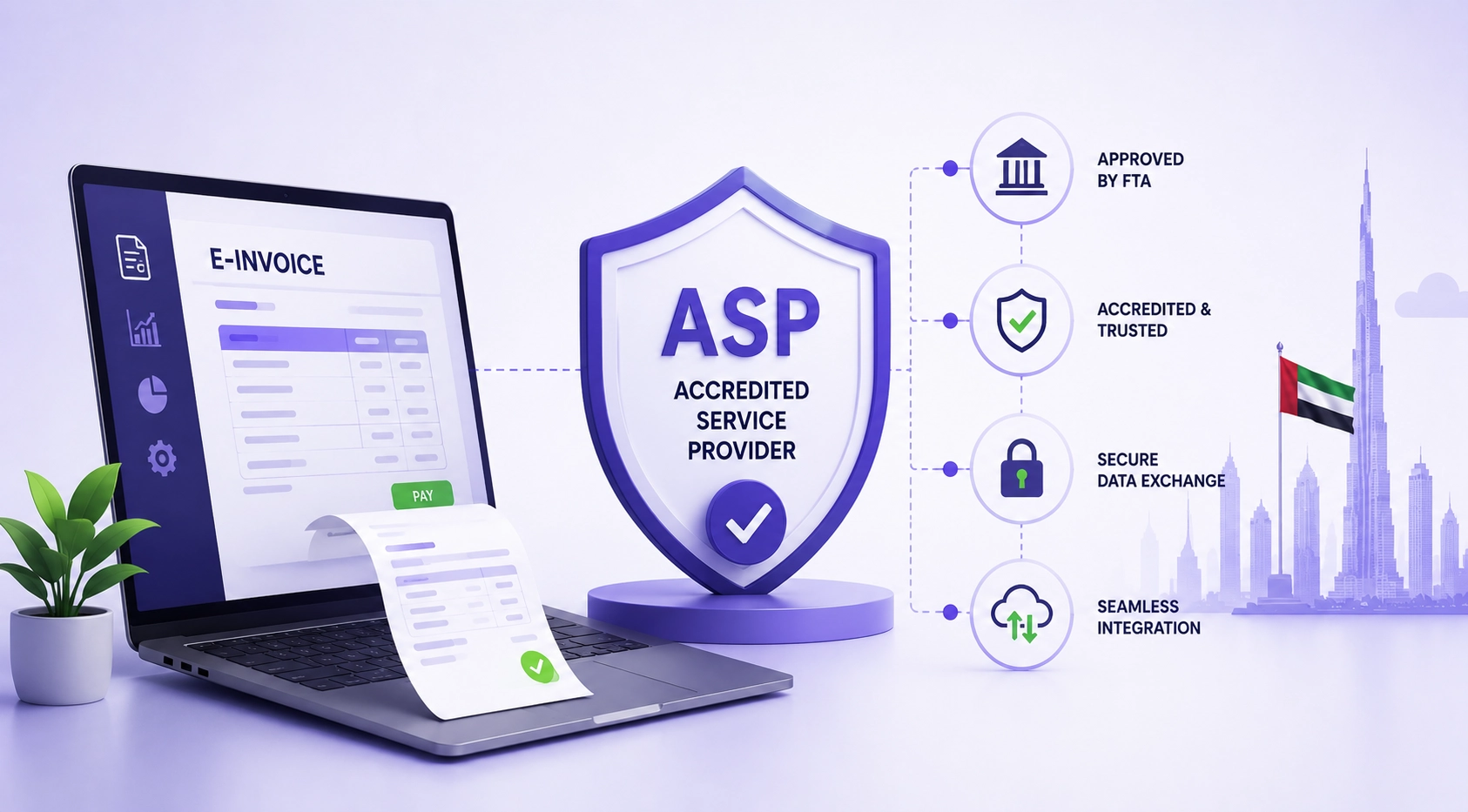
[[shortcode1 title="Quick Answer:" description="An Accredited Service Provider (ASP) is a service provider accredited by the UAE Ministry of Finance to provide electronic invoicing services. In the UAE’s 5-Corner Model, ASPs sit between businesses and the e-invoicing network, exchanging structured e-invoice data between suppliers and buyers and reporting the required tax data to the Federal Tax Authority."]]
For a UAE business, the ASP matters because it provides the accredited connection needed to participate in the UAE e-invoicing framework. Your existing POS, accounting software, or ERP may still hold the transaction and invoice data, while the ASP performs a separate role in exchanging that data through the approved network.
Choosing an ASP is therefore both a compliance and an operational decision. You need to know what the provider handles, whether it can work with your existing systems, and what integration or implementation your business may require.
What Is an Accredited Service Provider (ASP)?
An Accredited Service Provider, or ASP, is officially defined by the UAE Ministry of Finance as a service provider granted accreditation to provide electronic invoicing services in the UAE.
Accreditation matters because an invoicing or software provider cannot operate as an ASP simply by offering e-invoicing technology. Service providers must meet defined business, technical, Peppol, security, and operational requirements before receiving final accreditation.
The UAE’s 5-Corner Model includes:
- Corner 1 | Supplier: The business issuing the electronic invoice.
- Corner 2 | Supplier’s ASP: Connects the supplier to the e-invoicing exchange.
- Corner 3 | Buyer’s ASP: Receives the electronic invoice on the buyer’s side.
- Corner 4 | Buyer: The business receiving the electronic invoice.
- Corner 5 | Federal Tax Authority (FTA): Receives the required tax data.
For your business, the important point is that the ASP provides the accredited connection to this framework. You work through an accredited provider rather than operating your own Peppol access point.
What Does an ASP Actually Do?
Once connected to your business systems, the ASP handles the technical exchange of electronic invoice data through the UAE e-invoicing framework.
Its key functions can include:
- Connect your business to the e-invoicing network: The ASP supports onboarding to the Peppol network and the required connection with your existing systems.
- Receive and prepare invoice data: Your system sends invoice data to the ASP in an agreed format. Where required, the ASP converts it into the UAE-standard XML format used for electronic invoice exchange.
- Validate the data: The ASP performs the required technical validations before the electronic invoice is exchanged.
- Exchange electronic invoices securely: The supplier’s ASP sends the electronic invoice to the buyer’s ASP through the approved network.
- Report required tax data to the FTA: The ASP handles the relevant tax-data reporting within the UAE’s 5-Corner Model.
- Return status information: Your business can receive confirmation showing whether invoice exchange and required reporting were successful or whether an issue needs attention.
Your business remains responsible for the accuracy of the invoice data it provides. Using an ASP does not transfer that responsibility to the provider.
ASP vs Accounting Software: What’s the Difference?
An ASP and your existing business software perform different jobs. Your POS, accounting software, or ERP may remain where operational and financial data is recorded, while the ASP provides the accredited connection used for e-invoicing exchange and reporting.
The Ministry of Finance readiness guidance asks businesses to ensure their accounting or ERP systems can extract the necessary electronic invoice data and complete any required integration with the ASP.
For an SME, the practical question is not simply whether existing software needs to be replaced, it is whether your current systems can provide the required data and connect effectively with the ASP you choose.
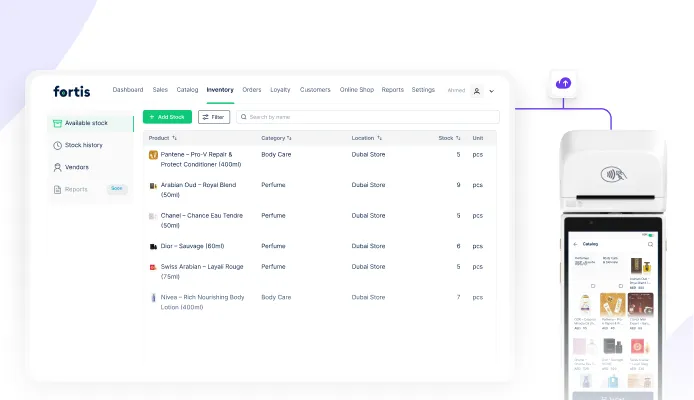
This distinction is also relevant to operational POS platforms such as Fortis SmartPOS. Fortis SmartPOS helps businesses manage sales, products, orders, customers, and reporting, while the accredited e-invoicing connectivity role belongs to the ASP.
How Does an ASP Connect to Existing Business Systems?
An ASP connects to the systems that provide your invoice data, such as accounting software, an ERP, or another invoicing application. The exact setup depends on the systems you use and the integration options supported by the ASP.
The Ministry of Finance recommends checking APIs, supported data formats, and integration support when evaluating a provider. Depending on your setup, the connection may use:
- An existing connector supported by the ASP or your software provider.
- An API integration that allows invoice data and relevant status information to move between systems.
- Another supported data-exchange method agreed between your business and the ASP.
Integration, however, is only part of the preparation. Your existing systems must also be able to provide the invoice data required for e-invoicing in a consistent and usable format. Poor or incomplete source data can create problems even when the technical connection itself works.
Before choosing an ASP, identify where your invoice data currently comes from and confirm three things with each provider:
- What data your existing systems need to provide.
- How that data will be transferred to and from the ASP.
- What integration, configuration, or data preparation your business will need to complete.
For SMEs, this makes the quality and organisation of existing business data particularly important. Systems that keep sales, customer, product, and transaction records organised give the business a clearer starting point for preparing the data required by its e-invoicing setup.
What Should You Look for When Choosing an ASP?
Choosing an ASP should start with two questions: Is the provider officially approved, and can it work with the systems your business already uses? From there, compare security, support, pricing, and scalability.
As of August 2026, the UAE Ministry of Finance lists 42 pre-approved e-invoicing service providers. The list is updated periodically as providers progress through the approval process, giving businesses a growing number of options to compare.
Pre-Approved vs Accredited: What’s the Difference?
Pre-approved and finally accredited are not the same status. A provider appearing on the Ministry of Finance’s pre-approved list has passed the relevant pre-approval stage, while final accreditation is granted separately after completing the required accreditation process and testing.
Before signing, check the provider’s current official status rather than relying on its website, sales material, or an older proposal.
Once status is confirmed, compare providers across the areas that will have the greatest impact on your business:
- Integration with your existing systems: Confirm whether the ASP can work with your accounting software, ERP, or invoicing system. Ask about available APIs, connectors, supported data formats, and any development or configuration required from your side.
- E-invoicing and Peppol experience: Check the provider’s experience operating e-invoicing systems, working with Peppol, and supporting businesses in the UAE.
- Security and data handling: Ask how invoice data is protected during transmission and storage, including encryption, access controls, security certifications, monitoring, and incident-response procedures.
- Reliability and support: Review the provider’s service-level agreements (SLAs), support availability, response times, and process for handling outages or technical failures.
- Error and status visibility: Make sure your team can see whether invoice exchange and tax-data reporting have succeeded or failed, and understand who is responsible for investigating and resolving errors.
- Total cost: Look beyond the headline price. Ask about recurring fees, transaction or volume-based charges, implementation and integration costs, support fees, and any additional services that may be charged separately.
- Scalability: Consider whether the ASP can support higher invoice volumes, additional locations, new systems, or more complex requirements as your business grows.
The best ASP is not necessarily the provider with the most features or the lowest headline price. For most businesses, the stronger fit is the provider that meets the required official status, works reliably with existing systems, and offers clear support and predictable costs.
Questions to Ask an ASP Before You Sign
Use the provider evaluation process to get specific answers before committing:
- Can you integrate with the accounting, ERP, invoicing, or other business systems we currently use?
- What development, configuration, or data-mapping work is required from our side?
- How will we see successful, failed, or rejected invoice exchanges and reporting statuses?
- What are your support response times and service-level commitments if invoice exchange is disrupted?
- How do you secure our invoice data during transmission and storage?
- What is included in the contract, and which integration, transaction, support, or other services carry additional charges?
- Can the platform support our expected invoice volumes and future growth?
- What changes would be required if we later replace one of our accounting, ERP, or other connected systems?
Clear answers to these questions make it easier to compare ASPs on operational fit rather than choosing solely on price or feature lists.
What Does ASP Onboarding and Implementation Involve?
Once you select an ASP and complete the commercial arrangements, the next step is to connect your business to the provider and prepare the setup for e-invoicing.
The exact process will depend on your existing systems and the ASP you choose, but implementation generally involves:
- Complete the required onboarding: Follow the applicable onboarding process, including the relevant steps through EmaraTax and with your chosen ASP.
- Confirm how your systems will work together: Agree with the ASP on how invoice data will be sent, how incoming electronic invoices will be received, and how status confirmations will be returned.
- Complete any required system changes: Your accounting software, ERP, or other relevant applications may need configuration, integration, or data-preparation work before they can exchange the required information with the ASP.
- Test the full process: Test outgoing invoice data, electronic invoice exchange, incoming invoices, tax-data reporting, and the status messages returned by the system. Testing should cover both successful transactions and errors.
- Agree on error handling and support: Establish who investigates failed exchanges, how issues are escalated, and how your team and the ASP will communicate when something goes wrong.
- Confirm go-live readiness: Before moving into production, make sure the required systems, data flows, testing, and internal responsibilities are in place.
Implementation can be relatively straightforward for a business using standard software with a supported connection, or more involved for organisations with customised ERP environments or multiple systems.
The goal is not simply to establish a technical connection. Before go-live, your business should know where invoice data comes from, how it reaches the ASP, how its status is monitored, and who is responsible for resolving an error.
Prepare Your Business for UAE E-Invoicing
Choosing an ASP is one part of preparing for UAE e-invoicing. Your business also needs reliable systems for managing the sales, customer, product, and transaction data that supports day-to-day operations and the wider invoicing process.
With SMEs the data is mostly scattered everywhere, so this is a good time to review whether your current POS and operational setup gives you the visibility and control you need as e-invoicing requirements approach. The best thing any SME can do is to have the right systems that make compliance easier such as Fortis SmartPOS that allows you to record every sale, payment (whether through card or cash) and allows you to create reports without any manual effort. .
Frequently Asked Questions
1. Is an ASP the same as accounting or invoicing software?
No. An ASP provides the accredited connection for UAE e-invoicing, while accounting or invoicing software manages your business’s financial and invoice data. Your existing software may connect to the ASP rather than being replaced by it.
2. Do businesses have to appoint an ASP for UAE e-invoicing?
Yes, if the business falls within the mandatory UAE e-invoicing requirements. The deadline for appointing an ASP depends on the applicable implementation phase, so check when your business comes into scope.
3. Can an ASP work with the software my business already uses?
Yes, if the ASP supports your existing setup. Confirm the available APIs, connectors, and data formats before signing, including any integration or configuration work your business will need to complete.
4. How much does an ASP cost in the UAE?
There is no standard ASP price in the UAE. Costs depend on the provider and may include recurring fees, transaction or volume charges, integration, implementation, support, and other services.
5. What should I check before signing an ASP contract?
Check the provider’s current official status, system compatibility, security, service levels, support, total cost, and additional charges. The contract should also clearly state which implementation and troubleshooting responsibilities belong to your business and which belong to the ASP.