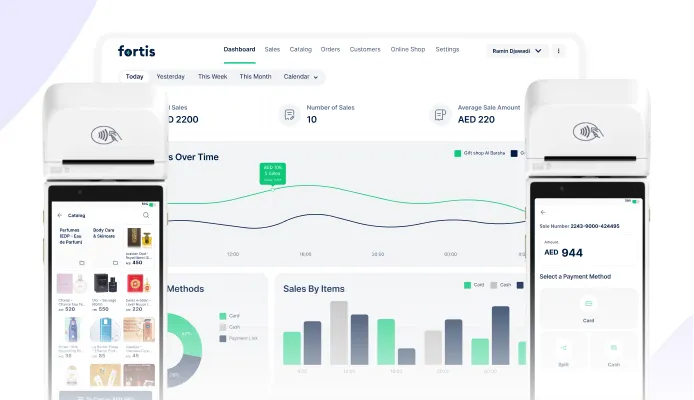
.svg)
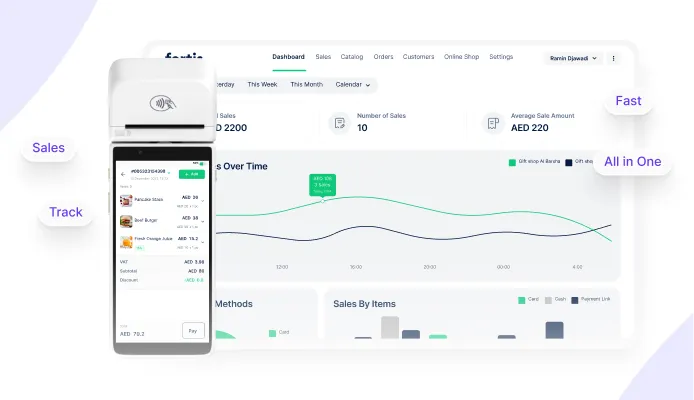


.svg)

.jpeg)


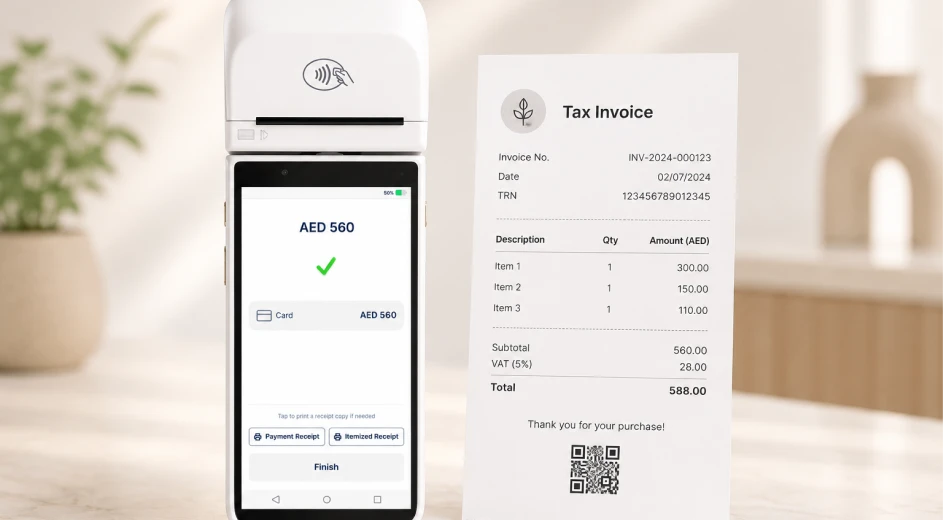
[[shortcode1 title="Quick Answer:" description="A simplified tax invoice in the UAE is a VAT-compliant document issued for taxable transactions of AED 10,000 or less. It must include the words “Tax Invoice”, the supplier’s name and address, TRN, invoice date, a description of the goods or services supplied, and the total price with VAT indicated. It does not require full buyer details."]]
Every sale you make in the UAE is a compliance event. If your business is VAT-registered, you are legally required to issue a tax invoice for every taxable supply, and the format of that invoice depends on the value of the transaction.
For most day-to-day retail and service transactions in the UAE, the document you issue is a simplified tax invoice. Getting its contents wrong, or issuing a plain receipt in its place, creates a compliance gap that can affect your VAT filing and expose you to penalties during an FTA audit.
This guide explains what a simplified tax invoice is, what it must contain under UAE VAT law, how it differs from a full tax invoice, and how your point-of-sale system can help reduce the risk of issuing a non-compliant document.
What Is a Simplified Tax Invoice in the UAE?
A simplified tax invoice is a VAT-compliant document that registered businesses in the UAE can issue for lower-value taxable supplies. It is governed by the UAE Federal Tax Authority (FTA) and applies to Business-to-Consumer (B2C) transactions where the total consideration does not exceed AED 10,000.
Despite the word “simplified,” it is not optional or informal. It is a legally required document with defined fields. A plain cash receipt or payment confirmation does not qualify as a simplified tax invoice unless all required elements are present.
For most cafes, retail shops, salons, gyms, and food trucks operating in the UAE, the simplified tax invoice is the document you will issue on the majority of your daily transactions.
When Is a Simplified Tax Invoice Used?
You can issue a simplified tax invoice when either of the following applies:
- The recipient is not VAT-registered.
- The recipient is VAT-registered and the total consideration, including VAT, does not exceed AED 10,000.
In both cases, the supply must be a taxable supply subject to UAE VAT rules.
Where a full tax invoice is required under UAE VAT regulations, businesses should issue the full invoice format instead.
In practice, most over-the-counter restaurant, retail, and service transactions in the UAE fall within the simplified invoice threshold. A coffee, a haircut, a gym session, or a clothing purchase are all common examples.
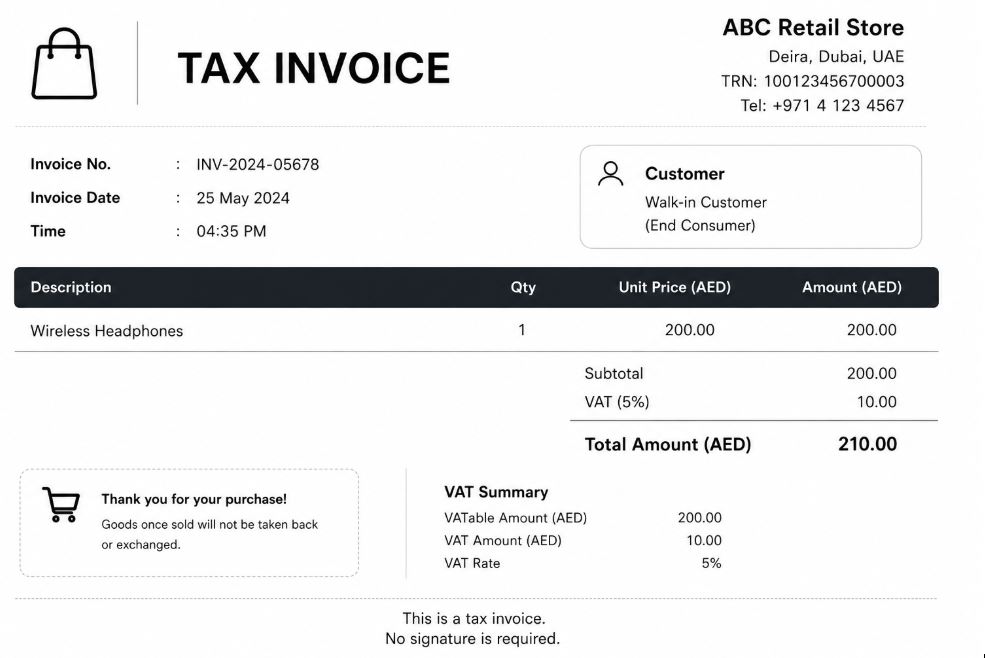
The FTA specifies the minimum information a simplified tax invoice must contain. Missing any one of these elements means the document may not meet UAE VAT documentation requirements.
Unlike a full tax invoice, a simplified tax invoice does not require the buyer’s name, address, or TRN. That is why it works well for everyday retail and service transactions where businesses serve large numbers of customers.
Simplified Tax Invoice vs. Full Tax Invoice
Understanding the difference between the two document types helps you apply the right format to the right transaction.
If a VAT-registered business customer asks you for a full tax invoice because they need to recover input VAT, you are obligated to issue one regardless of the transaction value. Issuing a simplified invoice in that scenario does not satisfy their documentation requirement.
Common Simplified Tax Invoice Mistakes
Most compliance gaps in simplified invoicing are not deliberate. They result from using a generic receipt template, relying on a POS system that was not configured for UAE VAT, or assuming that any printed receipt qualifies as a tax document. The following mistakes appear most frequently in SME environments:
Missing or incorrect TRN
Your Tax Registration Number must appear on every simplified tax invoice. A missing TRN means the document is not FTA-compliant, even if all other fields are correct. Verify your TRN appears correctly in your POS configuration before you start trading.
No VAT indication
The invoice must either show the VAT amount separately or include a clear statement that the total price includes VAT at 5%. A receipt that shows only the total price, with no VAT reference, does not meet the requirement.
Issuing a plain receipt instead of a tax invoice
A receipt confirms payment. A simplified tax invoice confirms the details of a taxable supply. They are not the same document. If your system generates a receipt that does not include your TRN, the date, a supply description, and VAT information, it is not a tax invoice.
Using a non-UAE-configured POS system
POS systems built for markets outside the UAE may not apply 5% VAT automatically, may not include your TRN on printed output, and may not format the document in a way that satisfies FTA requirements. Always verify UAE VAT compliance with your POS vendor before using the system for live transactions.
Retail businesses evaluating POS options should also review our guide to choosing the best POS system for retail in the UAE.
Not keeping copies for the required period
UAE VAT regulations require businesses to retain tax documents for a minimum of five years. A system that does not store digital copies creates a record-keeping risk, particularly for businesses with high transaction volumes.
How a POS System Helps Generate Simplified Tax Invoices
The most reliable way to generate consistent, compliant simplified tax invoices is to configure your POS system correctly at setup. A properly configured POS removes the manual steps that create compliance errors.
Automatic VAT calculation
A UAE-configured POS applies 5% VAT to every taxable sale without requiring manual input from the cashier. There is no risk of a staff member forgetting to add VAT, or applying the wrong rate. Systems such as Fortis SmartPOS apply VAT automatically on every transaction and itemise it on the printed receipt, so the document is compliant from the moment the sale is completed.
Consistent invoice format
A POS system prints the same format on every receipt: your trade name, TRN, date, item description, VAT amount, and total. Staff do not need to know what goes on a tax invoice — the system handles it. This is especially important in fast-paced environments like cafes, restaurants, and retail stores where dozens or hundreds of transactions happen every shift.
Reduced manual errors
Manual invoicing in spreadsheets or generic templates introduces risk at every step: wrong VAT rate, missing TRN, incorrect date, or an unclear product description. A POS system eliminates these points of failure because the invoice fields are populated from the product catalog and configured tax settings, not typed manually.
Real-time record keeping
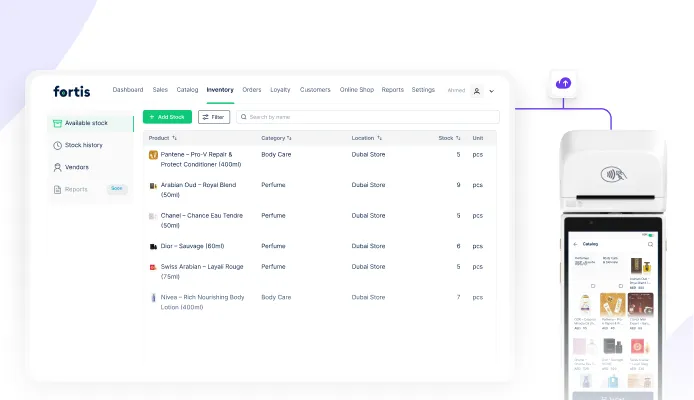
Every transaction processed through a cloud-based POS is stored digitally and accessible from the Fortis merchant dashboard at any time. At the end of a VAT quarter, you can export your sales data in a format that supports your FTA filing, rather than manually collating receipts or cross-referencing cash records.
Handling cash and card transactions consistently
A common compliance gap in UAE SMEs is applying VAT correctly to card payments but not recording cash sales in the same way. A POS system that records all payment methods — card, cash, and digital wallets — through the same interface ensures your invoicing is consistent regardless of how the customer pays.
How Simplified Tax Invoices Support VAT Compliance
Simplified tax invoices are not just a transactional courtesy. They are a core component of your VAT compliance process.
Your output tax liability is calculated based on the taxable supplies you make during each VAT period. If your simplified invoices are missing, incomplete, or formatted incorrectly, reconciling your reported output tax against your actual sales becomes difficult and creates exposure during an FTA audit.
For businesses registered for VAT in the UAE, the FTA can request transaction records as part of a compliance review. Businesses that cannot produce complete, correctly formatted invoices for their sales history risk penalties and assessments.
Maintaining clean simplified tax invoice records across every transaction is the most direct way to keep your VAT position accurate and auditable. A POS system that generates compliant documents automatically, stores them digitally, and allows export by date range makes this straightforward to manage.
Print Simplified Tax Invoices From Your Card Machine with Fortis SmartPOS
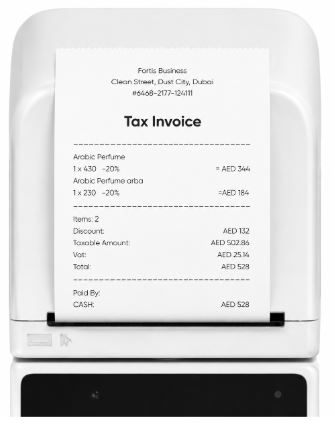
If you are a small business and you have a card machine with Fortis SmartPOS installed on top of it, then you can print simplified tax invoices directly from your card machine and record everything online, so when it is time to reconcile or file your taxes, you will have everything in one place and there will be no back and forth.
Key Takeaways
- A simplified tax invoice is legally required for taxable supplies of AED 10,000 or below in the UAE.
- It must include your trade name, TRN, invoice date, supply description, total amount, and VAT indication.
- It does not require buyer details, a sequential invoice number, or a line-by-line price breakdown.
- A plain receipt does not qualify as a simplified tax invoice unless all required fields are present.
- If a VAT-registered buyer requests a full tax invoice, you must issue one regardless of the transaction value.
- A UAE-configured POS system automates VAT application, ensures consistent invoice formatting, and supports record keeping for FTA filing.
This guide is general information, not tax advice. You need to consult a registered tax agent for your situation.
Frequently Asked Questions
Does a simplified tax invoice need a TRN?
Yes. Your Tax Registration Number (TRN) issued by the FTA is a required field on a simplified tax invoice. Without it, the document does not meet the UAE VAT requirement. Check that your TRN is correctly configured in your POS or invoicing system before processing any transactions.
What is the difference between a receipt and a simplified tax invoice?
A receipt confirms that payment was received. A simplified tax invoice is a formal VAT document that confirms the terms of a taxable supply and must include your TRN, supply date, description, total amount, and VAT information. Many POS-generated receipts double as simplified tax invoices when the system is correctly configured for UAE VAT.
Can my card machine print a compliant simplified tax invoice?
It depends on the POS software installed on the device. A standard card machine prints a payment confirmation, not a tax invoice. If your card machine runs UAE-configured POS software that applies 5% VAT automatically and includes your TRN on the printed output, it can generate a compliant simplified tax invoice. Verify this with your POS provider before going live.
What should I check before choosing a POS system for VAT compliance?
Confirm that the system automatically applies 5% UAE VAT on every transaction, includes your TRN on printed receipts, stores digital copies of all transactions, and allows you to export sales data by date range for quarterly filing. Also check whether it handles both card and cash transactions through the same invoicing flow, since both payment types generate a VAT liability.
Can a POS system automatically apply VAT?
Yes, most UAE-configured POS systems apply VAT at 5% automatically once the tax settings are configured correctly at setup. The system calculates VAT per sale, itemises it on the invoice, and records it in your sales reports without any manual input required from staff.
Is there a penalty for issuing a non-compliant simplified tax invoice?
The FTA can impose administrative penalties on businesses that fail to issue compliant tax invoices. The penalty for failing to issue a tax invoice for a taxable supply is AED 5,000 per instance. Keeping your invoicing consistent and compliant from day one is significantly cheaper than correcting a compliance issue after the fact.