.svg)


.svg)

.jpeg)


[[shortcode1 title="Quick Answer:" description="What Is Pay at Table? Pay-at-Table is a restaurant payment method that allows guests to view their bill, split payments, leave tips, and pay directly from their phones instead of waiting for a server to bring a card machine or process the payment elsewhere. Depending on the solution, payment can happen through a QR code, a handheld payment terminal, or another table-side device. Modern solutions also integrate with a restaurant POS system and automatically update the bill and close the table once payment is complete.."]]
The payment experience is the final interaction guests have with your restaurant, and it can leave a lasting impression. Even after great food and service, waiting for the bill or a payment terminal can slow down the customer journey and keep staff occupied with manual payment tasks.
As payment habits continue to evolve in the UAE, restaurants are adapting to meet changing customer expectations. According to Visa's 2026 Where Cash Hides report, 80% of payments in the UAE are now made digitally, highlighting the growing preference for faster and more convenient payment experiences.
Pay at Table helps restaurants meet those expectations by allowing guests to review their bill, split payments, leave tips, and pay directly at the table. This guide explains how Pay at Table works, how it compares with traditional restaurant payments, and what UAE restaurants should look for when choosing a solution.
What Is Pay at the Table?
Pay-at-Table is a restaurant payment solution that enables guests to settle their bill directly from their table instead of paying at a cashier or waiting for staff to process the payment elsewhere.
Depending on the solution, guests may pay by:
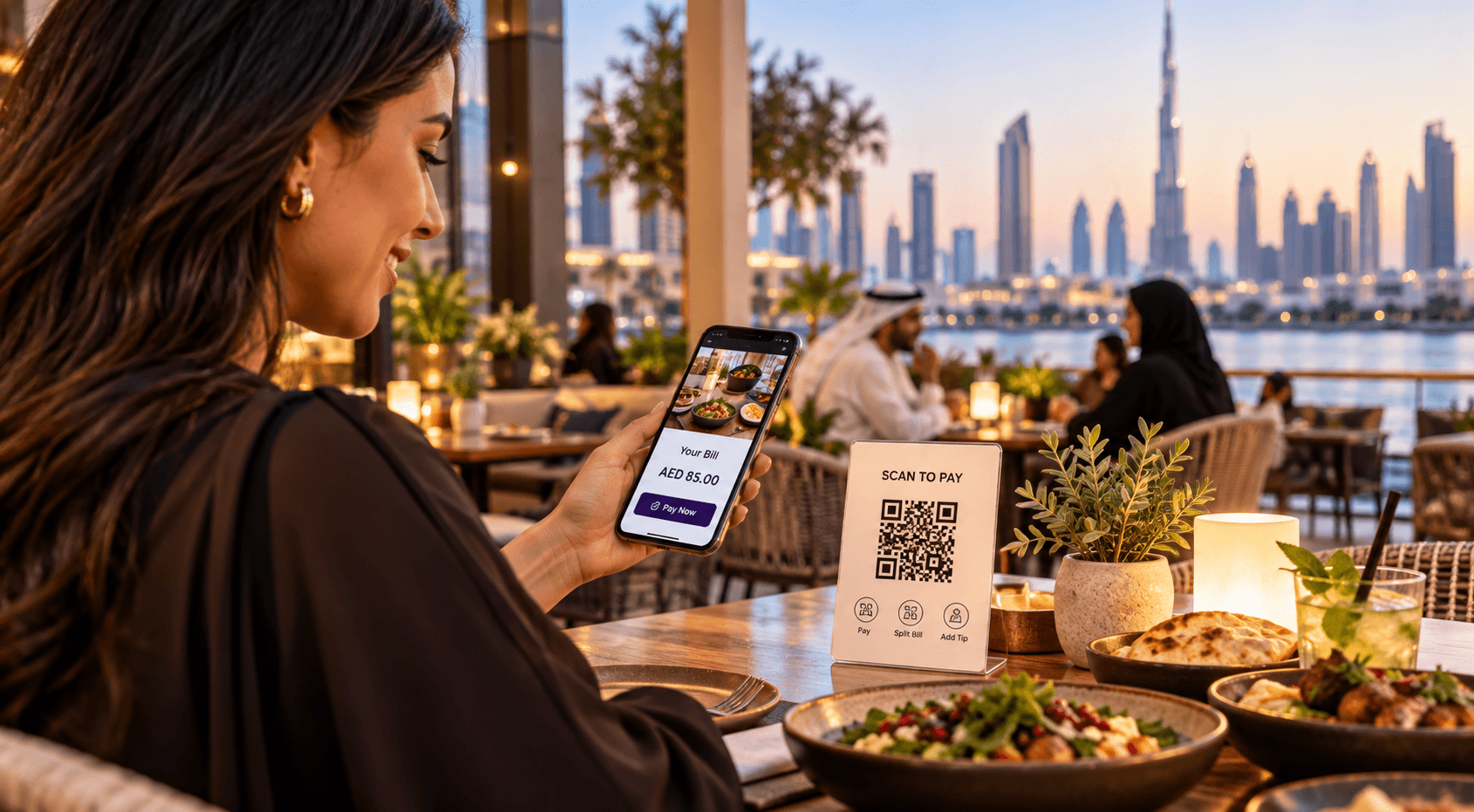
- Scanning a QR code displayed on the table.
- Using a handheld payment terminal brought to the table by a staff member.
- Interacting with another table-side payment device.
Regardless of the payment method, the goal is the same: make paying as simple and convenient as ordering.
Unlike traditional restaurant payments, Pay at Table simplifies checkout by letting guests review their bill, split payments, leave a tip, choose their preferred payment method, and pay when they're ready without waiting for staff.
Modern Table Pay solutions also integrate with restaurant POS software and automatically record completed transactions, generate receipts, update table status, and reduce manual reconciliation.
How Does Pay-at-Table Work?
Pay-at-table simplifies the checkout process by allowing guests to review and settle their bill directly from the table. Depending on the solution, the process usually follows six steps.
1- Access the Bill
When guests are ready to pay, they scan the QR code on the table or the server opens the bill on a handheld POS device.
2- Review the Bill
Guests can check the ordered items, quantities, taxes, service charges, and final total before proceeding.
This gives them a clear view of what they are paying for and helps resolve any questions before payment.
3- Split the Bill
For group dining, guests may be able to:
- Split the bill equally.
- Pay for selected items.
- Enter a custom amount.
This removes the need for staff to calculate separate payments manually.
4- Add a Tip
Guests can select or enter a tip amount before completing the transaction.
Including tipping within the payment flow makes the process simple and discreet, whether guests pay from their phone or through the POS terminal.
5- Choose a Payment Method
Guests select one of the payment methods supported by the restaurant, such as:
- Credit or debit card.
- Apple Pay.
- Google Pay.
- Other supported digital wallets.
The aim is to let guests complete payment using a method they already know and trust.
6- Update the Restaurant POS
Once payment is confirmed, an integrated Pay-at-table solution records the transaction, generates the receipt, and updates the table status inside the restaurant POS system.
This is what separates an integrated Pay-at-table solution from a standalone online payment page. Staff do not need to record the transaction again or close the table manually.
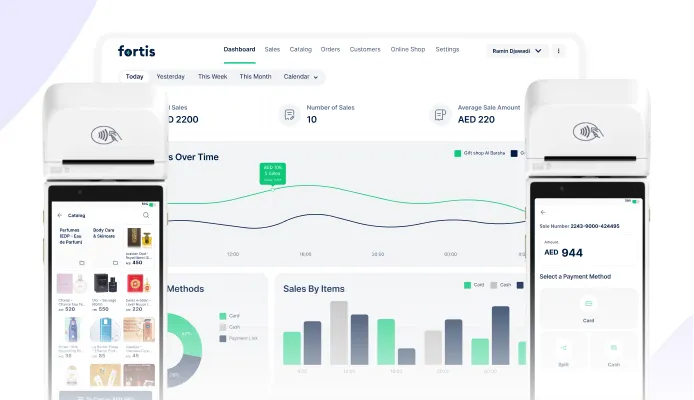
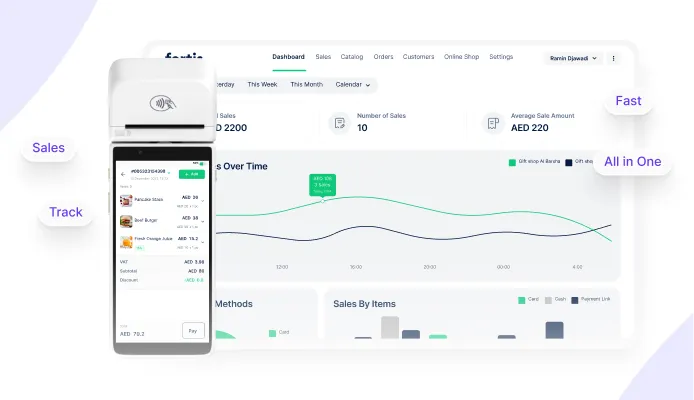
With Fortis Table Pay, guests can browse the QR menu, review their bill, split payments, leave a tip, and pay from their phone. Staff can also accept cash, card, or digital wallet payments through the POS terminal. Once the bill is settled, the table closes automatically and the transaction is recorded in the connected POS system such as Foodics or Syrve.
Pay-at-table vs QR Ordering: What's the Difference?
Pay-at-table and QR Ordering are often confused, but they serve different purposes within the restaurant journey.
Some restaurant platforms combine both experiences, allowing guests to browse the menu, place orders, review the bill, and complete payment within a single workflow.
For restaurant operators, the real value isn't whether a solution uses QR codes. It's whether ordering, payments, and POS updates work together seamlessly to reduce staff workload and create a faster, more convenient guest experience.
Pay-at-Table vs Traditional Restaurant Checkout
The biggest difference between traditional restaurant payments and Table Pay is how quickly and efficiently guests can complete checkout.
Traditional restaurant payments often involve multiple steps, with staff handling most of the checkout process. Table Pay streamlines these steps, allowing guests to pay sooner while reducing manual work for restaurant staff.
The goal isn't to replace hospitality. It's to reduce repetitive payment tasks so staff can spend more time focusing on guests instead of processing payments.
Is Pay-at-table Secure?
Security is a common concern when introducing any new payment technology, but modern Pay-at-Table solutions are designed to work with the same trusted payment infrastructure used for everyday card and contactless payments.
For guests, one of the biggest advantages is that they remain in control of the payment process. Whether they pay from their phone or tap their card on a card machine at the table, there's no need to hand their card to staff or wait while it's processed elsewhere.
For restaurants, security also depends on choosing a solution that integrates with a restaurant POS, works with trusted payment providers, and records transactions automatically. This reduces manual errors, keeps payment records accurate, and creates a more reliable checkout experience.
Benefits of Pay-at-Table for Restaurants
Pay-at-table does more than speed up payments. It helps restaurants simplify operations, reduce manual tasks, and improve the overall guest experience.
1-Faster Table Turnover
Guests can pay as soon as they're ready, helping free up tables faster during busy service.
2- Better Staff Efficiency
Staff spend less time processing payments and more time serving guests, improving both efficiency and the dining experience.
3- Easier Bill Splitting
Guests can split payments equally, by item, or by a custom amount, reducing manual calculations and speeding up checkout.
4- Digital Tipping
Built-in tipping makes it easier for guests to leave gratuities as part of the checkout process.
5- Automatic POS Synchronisation
Integrated solutions automatically update the restaurant POS, record completed payments, generate receipts, and reduce manual reconciliation.
6- Connected Guest Experience
Some solutions also combine digital menus with Pay-at-table, allowing guests to browse the menu, review their bill, and pay within a single experience.
Benefits of Pay-at-table for Restaurant Guests
Pay-at-table gives guests greater control over how and when they pay, making the checkout process faster, simpler, and more convenient.
1- Faster Checkout
Guests can pay as soon as they're ready instead of waiting for staff to process the payment. For business lunches, families, and diners on tight schedules, even saving a few minutes can improve the overall dining experience.
2- More Flexible Payment Options
Guests can pay using their preferred payment method, including contactless cards, Apple Pay, Google Pay, and other supported digital wallets.
3- Simple Bill Splitting
Splitting the bill is often one of the most awkward parts of group dining. Pay-at-table makes it easier to split payments equally, pay for selected items, or enter a custom amount without asking staff to calculate each person's share.
4- Greater Payment Control
Guests can review their bill, confirm the amount, leave a tip, and complete payment at their own pace. The result is a smoother checkout with fewer interruptions at the end of the meal.
Is Pay-at-table Right for Your Restaurant?
Pay-at-table isn't limited to one type of restaurant. However, the operational benefits vary depending on your service model and how guests interact with your team.
Restaurants across the UAE where guests typically remain seated until the end of their meal often see the greatest operational benefits from Pay-at-table. Allowing customers to pay without waiting for staff helps reduce checkout delays while enabling servers to spend more time delivering attentive service.
For cafés and casual dining venues, Pay-at-table can also improve throughput during busy periods by shortening the final stage of the customer journey.
What Should You Look for in a Pay-at-table Solution?
Choosing a Pay-at-table solution for a UAE restaurant isn't just about accepting payments at the table. The right platform should fit naturally into your restaurant's existing workflow, making checkout easier for guests while reducing manual work for your team.
Before making a decision, these are the features that matter most.
1- Seamless Restaurant POS Integration
A Pay-at-table solution should work as an extension of your restaurant POS, not as a separate payment tool.
Once payment is completed, the transaction should be recorded automatically, the receipt generated, and the table updated without requiring staff to manually reconcile payments.
2- QR Menu Integration
A digital menu creates a more connected guest journey. Guests can browse the menu, review their bill, and complete payment within the same experience, reducing unnecessary steps and eliminating the need for printed menus.
3- Flexible Bill Splitting
If your restaurant regularly serves families, business lunches, or larger groups, bill splitting should be built into the checkout process.
Look for a solution that supports equal splits, item-based payments, and custom payment amounts without requiring staff intervention.
4- Multiple Payment Methods
Guests expect the flexibility to pay using the method they already trust, whether that's a card, Apple Pay, Google Pay, or another supported digital wallet.
The easier it is for guests to pay, the smoother the checkout experience becomes.
5- Built-in Digital Tipping
Adding tipping directly into the payment flow makes it easier for guests to leave gratuities while keeping the checkout process quick and uninterrupted.
6- Simple Setup and Scalability
The best Pay-at-table solutions work with your existing payment infrastructure instead of requiring a complete operational overhaul.
Whether you operate a single café or multiple restaurant locations, deployment should be straightforward, require minimal staff training, and scale as your business grows.
How Fortis Pay-at-table Supports UAE Restaurants
Fortis Pay-at-table is designed to modernise restaurant payments without adding unnecessary complexity to day-to-day operations.
Guests can scan a QR code to access the menu, review their bill, split payments equally, by item, or by a custom amount, leave a tip, and pay directly from their phone. Restaurants can also continue accepting payments through the POS terminal, giving guests the flexibility to choose the checkout experience that suits them best.
Because Fortis Table Pay integrates with your restaurant POS, it also fits naturally into the wider restaurant technology ecosystem, including a QR menu and a Kitchen Display System (KDS). This helps keep front-of-house and back-of-house operations connected, from ordering and payments to kitchen workflows and reporting.
Once payment is completed, the transaction automatically synchronises with the restaurant's POS system, allowing the bill to be recorded and the table to close without additional manual steps.
Beyond payments, Fortis Pay-at-table also helps restaurants enhance the overall guest experience with QR menus, integrated tipping, Google review requests, and automated payment reporting. These features work together in a single workflow that fits naturally into existing restaurant operations. Explore the full Fortis Pay-at-table solution to see how it can simplify restaurant payments and improve day-to-day operations.
Frequently Asked Questions
1- Can customers still pay by cash or card with Pay-at-table?
Yes. Restaurants can continue accepting cash, cards, and contactless payments while also giving guests the option to pay from their phone.
2- Does Pay-at-table work with an existing restaurant POS?
Yes, if the solution supports POS integration. Completed payments can be recorded automatically, receipts generated, and tables closed without manual reconciliation. For example, Fortis Table pay currently works with Foodics and Syrve.
3- Do guests need to install an app to use Pay-at-table?
No, in most cases. Many Pay-at-table solutions open in a mobile web browser, allowing guests to review and pay their bill without downloading an app.
4- What features should a restaurant look for in a Pay-at-table solution?
Choose a solution that integrates with your restaurant POS, supports multiple payment methods, includes a digital menu, offers flexible bill splitting, and works with your existing payment infrastructure.