.svg)


.svg)




.png)
Running a retail store in the UAE means juggling multiple systems: one for inventory, another for accounting, maybe a third for payments. Sounds familiar? You're not alone. Many retail businesses struggle with multiple systems that are not connected to each other, leading to manual data entry, inventory mismatches, and frustrated staff.
This guide breaks down the different best POS systems for retail available in the UAE market, what they actually do, their limitations, and how to choose the right one for your retail business.
Understanding the Retail POS Landscape in UAE
The point-of-sale software market has evolved significantly over the years. What started as simple cash registers has transformed into a complex ecosystem of cloud platforms, accounting integrations, and payment terminals.
As retail technology becomes more advanced, the gap between what systems can do and what retailers actually need continues to widen. In the UAE, most retail businesses end up using ERP or accounting systems due to which payment terminals, inventory management, and customer loyalty programs frequently operate as separate systems
So, choosing the right POS system is no longer about picking the most feature-rich solution rather it is about selecting a system that aligns with how your business operates on a daily basis.
For example, if you are a small retail store that primarily accepts in-store payments, you may not need a complex ERP setup, but you will need a reliable system for payment recording, simple inventory tracking, and clear sales reporting.
On the other hand, if you are a multi-branch retailer, you may require deeper integrations, centralized reporting, and tighter control over stock and staff permissions.
To make it easier for you, we have listed down the types of retail POS systems in the UAE and the best ones in the category to help you make the right decision.
Types of Retail POS Solutions: What Works and What Doesn't
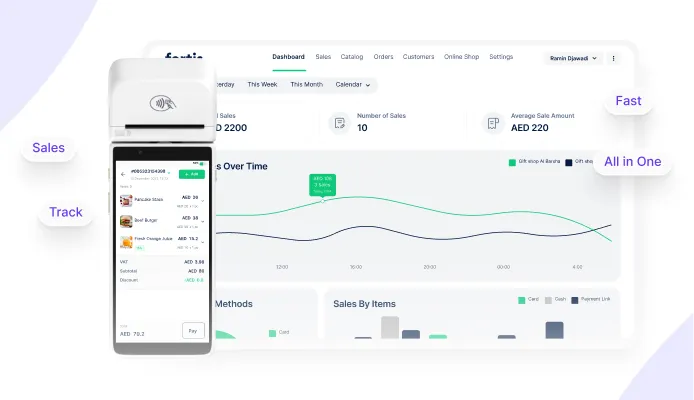
All in one POS on your Card Machine
Popular Option: Fortis SmartPOS
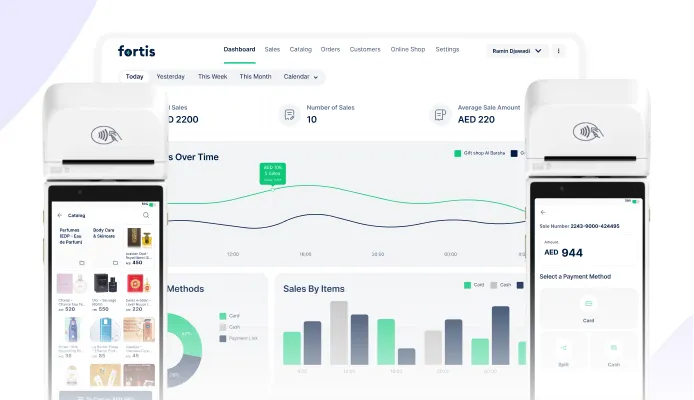
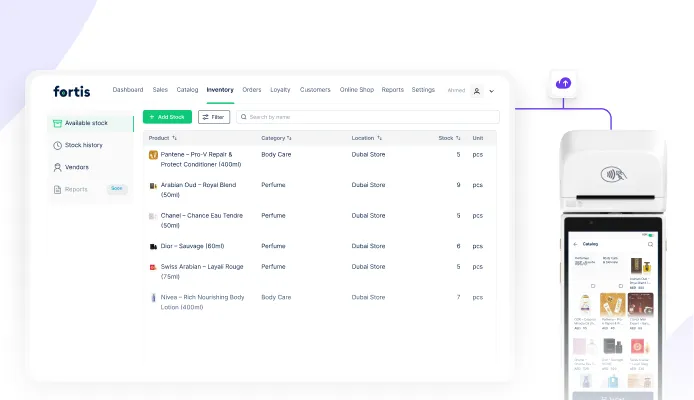
These are complete POS systems that run directly on your card machines. These solutions combine cloud-based sales management, loyalty, inventory tracking, and reporting with the payment processing, so you can manage everything from your card machine and a cloud platform.
What makes them different: The key advantage of these systems is that they eliminate the payment integration challenge entirely. When the POS software runs on the actual payment terminal, there's no separate integration to set up, no compatibility issues to solve, and no manual amount entry between systems. The card terminal and POS are one unified device.
These solutions provide the same cloud benefits as traditional cloud POS systems such as remote access to reports, automatic software updates, multi-location management but with seamless payment processing built in from day one.
Where they may have limitations: Since they run on payment terminal hardware rather than tablets or computers, the screen size and interface are optimized for the device. Some businesses prefer larger displays for complex transactions or visual catalogs.
Best for: Retailers who want modern cloud POS capabilities with guaranteed payment integration, prefer consolidated hardware (one device instead of separate POS and card terminal), and don't require large display screens and bulky hardware for their sales process.
E-Commerce Platforms as POS Systems
Popular options: Shopify, WooCommerce, Ecwid, Magento
What they cover: Online payments through acquirers like Stripe or Network International, digital invoices, sales tracking, product catalogs, inventory management, and reporting dashboards.
Where they fall short: E-commerce platforms excel online but struggle with physical retail needs. They lack proper cash register interfaces, can't print receipts easily, and don't integrate with payment terminals used in UAE stores. If you're running a brick-and-mortar location, these platforms require significant workarounds.
Best for: Pure online retailers or businesses willing to manage separate systems for online and offline sales.
E-Commerce + POS Hybrid Solutions
Popular options: Shopify POS, WooCommerce with FooSales
What they cover: Unified catalog management, sales tracking across online and offline channels, inventory synchronization, and basic reporting.
Where they fall short: In the UAE specifically, adoption of these unified stacks remains limited. The missing piece is almost always payment terminal integration. Staff still need to manually enter transaction amounts on card machines, creating opportunities for errors. Additionally, many UAE merchants prefer keeping their accounting software as the single source of truth, making these hybrid solutions feel redundant.
Best for: Businesses already invested in an e-commerce platform looking to add basic retail functionality without changing their entire tech stack.
Accounting Software with POS Features
Popular options: Tally, Zoho Books, Alameen, QuickBooks,
What they cover: Comprehensive bookkeeping, VAT reporting, invoice generation, sales management, and financial reports that accountants actually want to see.
Where they fall short: These systems aren’t built for the retail floor. There's no payment terminal integration, no customer loyalty programs, and the interfaces are too complex for retail staff. Cashiers trained to use simple POS screens struggle with accounting software menus and workflows.
Best for: Businesses that prioritize accounting accuracy over retail experience, or those with dedicated back-office staff handling transactions.
Full ERP Systems with POS Modules
Popular options: Tally Prime, Odoo ERP, Zoho ecosystem with Zoho POS
What they cover: Everything from procurement to warehouse management, multi-location inventory, sales across channels, detailed analytics, and accounting in one massive system.
Where they fall short: Complexity is the main enemy here. Training retail staff to use ERP interfaces takes weeks, not days. There's still no payment terminal integration, and the learning curve creates constant errors at checkout. Many retailers find themselves simplifying processes just to make the system usable, negating the benefits of having an ERP in the first place.
Best for: Large retail chains with dedicated IT support and staff willing to invest heavily in training.
Inventory Management Systems
Popular options: Zoho Inventory, Odoo Inventory
What they cover: Robust catalog management, stock movements, warehouse locations, reorder points, supplier management, and detailed inventory reports. These are the backbone for businesses with complex B2C and B2B inventory needs.
Where they fall short: Inventory systems have no checkout functionality, no payment processing, and no customer-facing features. They're designed for the back office, not the sales floor.
Best for: Retailers with sophisticated inventory requirements who use separate systems for actual sales transactions.
Cloud POS Systems
Popular options: Lightspeed Retail, Hulexo, LithosPOS, Compucash, OverseePOS, Square,
What they cover: Cloud-based sales management, real-time inventory updates, reporting accessible from anywhere, customer management, and multi-location support.
Where they fall short: In the GCC region, payment integration is the Achilles heel. International solutions like Square don't work with UAE payment processors. Setting up integrations with local acquirers like Network International or Paymob is either expensive, technically complex, or simply unavailable. Some merchants pay thousands of dirhams in setup fees, only to find the integration unreliable.
Best for: Retailers comfortable with manual payment entry or willing to invest significantly in custom integrations.
Traditional On-Premise POS Systems
What they cover: Basic offline sales processing, local inventory management, receipt printing, and end-of-day reports.
Where they fall short: No cloud connectivity means no remote access to reports, no automatic software updates, no integration with external systems, and no way to manage multiple locations effectively. If the local server goes down, so does your business. There's also no loyalty program functionality, and adding new features requires expensive on-site upgrades.
Best for: Very small retailers with single locations who prioritize simplicity over features and don't need remote access.
Standalone CRM and Loyalty Programs
What they cover: Customer databases, discount management, reward points, promotional campaigns, and customer communication.
Where they fall short: These systems operate in isolation from actual transactions. Staff must manually award points or apply discounts, creating friction at checkout. There's no automatic connection to payments or real transaction data, making fraud easier and analytics harder.
Best for: Businesses with simple loyalty needs who can afford the operational overhead of managing disconnected systems.
The Real Cost of Fragmented Systems
Let's talk about what actually happens when you run multiple disconnected systems in a retail environment.
Inventory discrepancies: Your e-commerce platform shows 5 units in stock, your accounting software shows 3, and your actual shelf has 4. Which is correct? By the time you figure it out, you've already sold something you don't have.
Data entry errors: Staff enter the same sale three times - once in the POS, once in the card terminal, and once in the accounting system. Each entry is an opportunity for a mistake.
Training nightmares: New employees need to learn four different systems with four different interfaces. It takes weeks before they're comfortable at checkout, and you're paying for errors the entire time.
Reconciliation headaches: End of day means manually matching transactions across systems. What should take 10 minutes takes an hour, and you still find discrepancies.
Limited insights: Your POS knows what sold, your accounting system knows your costs, and your loyalty program knows your customers. But nothing connects these insights, so you make decisions with partial information.
What to Look for in a Retail POS System for UAE
Based on the limitations above, here's how you can choose the best retail POS system in UAE:
Payment terminal integration: In the UAE market, it is an absolute must. Your POS should communicate directly with your card machine and eliminate manual entry and errors. Look for solutions that work with Network International, Neopay, Paymob, or other local acquirers.
VAT compliance: UAE tax requirements aren't going away. Your system needs to generate proper VAT invoices, maintain compliant records, and provide reports your accountant can actually use.
Offline functionality: Internet connections fail. Your POS should continue processing sales offline and sync automatically when connectivity returns.
Staff simplicity: Complex systems create expensive errors. The interface should be intuitive enough that new staff can take their first sale within minutes, not days.
Reporting for accountants: Pretty dashboards are nice, but your accountant needs itemized transaction reports, cost of goods sold calculations, and VAT summaries in formats they can import into their systems.
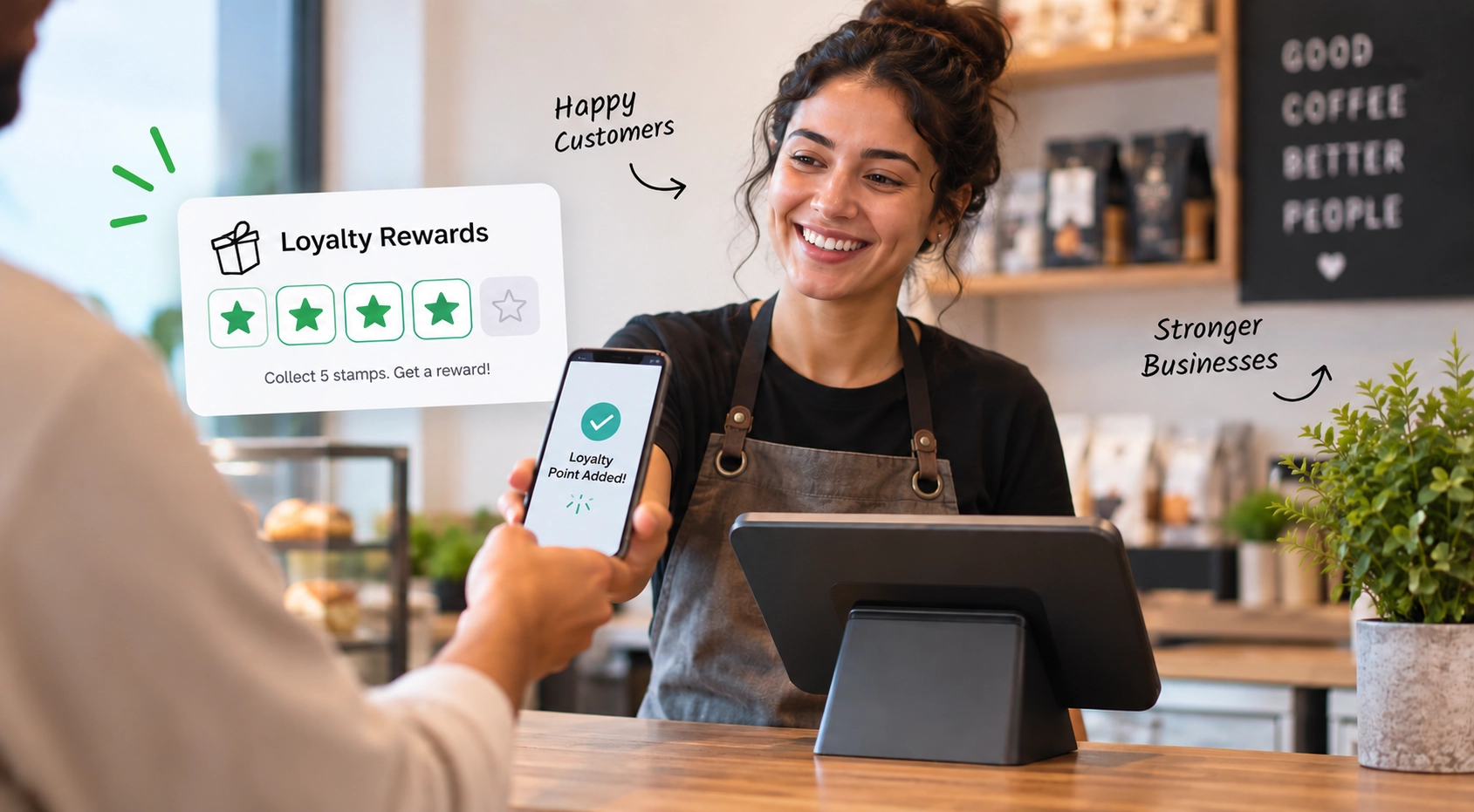
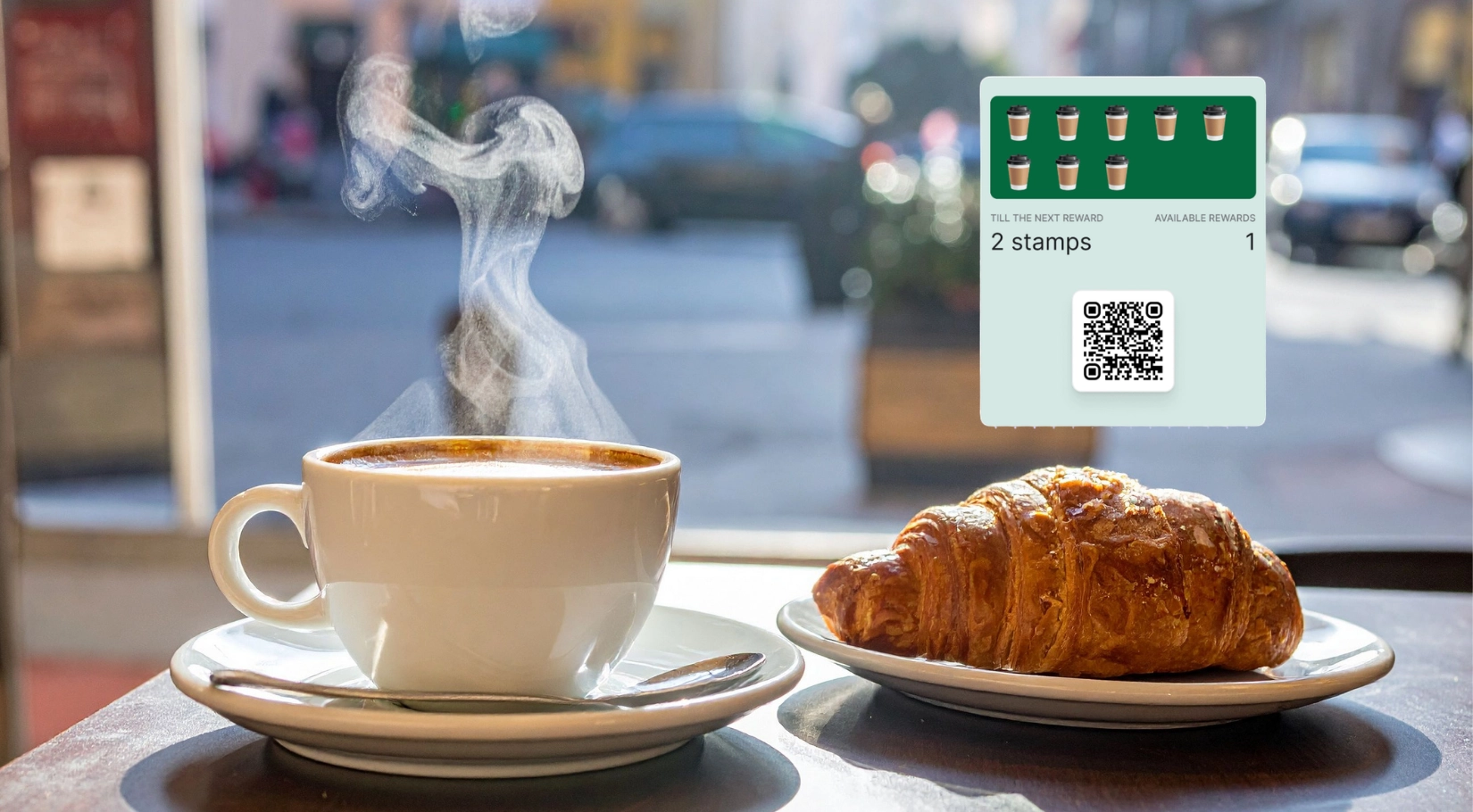
Integrated loyalty: Customer retention matters in competitive markets. Built-in loyalty programs mean points are awarded automatically at checkout, not as a separate manual step.
Making the Right Choice for Your Business
There's no universal "best" POS system because retail businesses vary dramatically. A fashion boutique in Dubai Mall has different needs than a grocery store in Sharjah.
Start with your pain points:
- Are inventory errors costing you sales?
- Is end-of-day reconciliation taking too long?
- Are customers complaining about checkout speed?
- Is training new staff taking weeks?
Consider your growth plans:
- Planning to open more locations?
- Want to add online sales?
- Thinking about expanding your product catalog?
Evaluate technical reality:
- Do you have reliable internet?
- What payment terminals do you already have?
- What accounting software does your accountant prefer?
Calculate total cost:
- Monthly subscription fees
- Payment processing rates
- Training time and costs
- Integration and setup fees
- Hardware requirements
The Future of Retail POS in UAE
The UAE retail market is moving toward more integrated solutions, but at its own pace. Unlike international markets where merchants quickly adopt all-in-one platforms, UAE retailers remain conservative, preferring proven systems and accountant-approved setups.
This creates opportunities for POS solutions that bridge the gap - systems that are simple enough for retail staff but sophisticated enough to integrate with existing accounting and inventory systems. The winners will be platforms that work with UAE payment processors out of the box, provide VAT-compliant reporting, and respect the role of accountants in the local business culture.
Key Takeaways
The UAE retail POS landscape offers many options, but most solutions come with significant compromises. E-commerce platforms lack retail features, accounting software is too complex for checkout, and international POS systems don't integrate with local payments.
When evaluating options, prioritize systems that:
- Integrate directly with UAE payment terminals
- Simplify staff workflows rather than complicate them
- Provide accounting-friendly reports and VAT compliance
- Offer built-in rather than bolted-on loyalty programs
- Work reliably in the actual conditions of UAE retail environments
The best POS system isn't the one with the most features - it's the one that solves your specific operational challenges while fitting into your existing business workflows. Take time to test systems with your actual staff, your actual products, and your actual payment terminals before committing to a long-term contract.
Your POS is the operational heart of your retail business. Choose wisely, and it'll make your life easier every single day. Choose poorly, and you'll fight it constantly while losing money to inefficiencies.