.svg)


.svg)

.jpeg)


.png)
For years, loyalty programs have been a simple promise between businesses and their customers: come back, and you’ll be rewarded. Traditionally, this promise used to live on paper cards.
Paper loyalty cards became popular in the late 20th century as small businesses looked for low-cost ways to encourage repeat visits without investing in complex systems. A physical card in a customer’s wallet served as a constant reminder to “come back one more time” for a free coffee, discount, or service.
From coffee shops stamping cards after every purchase to salons punching holes or scribbling initials, these cards were simple, tangible, and easy to roll out. However, as businesses grew and customer expectations evolved, the limitations of paper loyalty cards became increasingly obvious. Cards were often lost or forgotten, rewards were difficult to track accurately, and there was no way for businesses to understand customer behavior beyond counting stamps.
What started as a practical solution slowly turned into a manual, error-prone process, paving the way for digital loyalty cards.
In this guide, we’ll show you how to make a loyalty card for your business, explain how loyalty cards work, and walk you through creating a digital loyalty card step by step.
What is a Digital Loyalty Card?
A digital loyalty card is simply a modern version of the traditional stamp or paper loyalty card. The only difference is that instead of being printed and kept in a wallet, it lives digitally on your customer’s phone or inside your POS system.
Think of it this way: When a customer visits your restaurant and pays, their visit, points, or stamps are recorded automatically. There’s no physical card to stamp, no paper to track, and no risk of customers losing it. All they need is their phone number, QR code, or a quick scan at the counters.
For example you are a restaurant owner, with a digital loyalty card:
- You can reward repeat customers (free coffee, discount, free dish after X visits)
- You don’t need to print or manage physical cards
- You can see who your regular customers are and how often they visit
- Rewards are tracked accurately, without staff errors
For your customers, it’s simple and convenient:
- No cards to carry
- No stamps to remember
- Their rewards are always saved and ready to redeem
Why create a digital loyalty card rather than an app or paper cards?
When businesses think about launching a loyalty program, the first two options that usually come to mind are paper loyalty cards or a dedicated loyalty app. Both have been around for years, and both can work in certain situations. However, neither option is ideal for most modern businesses, especially restaurants, cafés, and service-based businesses that rely on speed, simplicity, and repeat visits.
Why paper cards might not be suitable?
At first glance, paper cards feel cheap. You print them once and hand them out.
But in reality, the costs add up:
- Printing and reprinting cards
- Staff time spent stamping, explaining, and replacing lost cards
- Free items given away without knowing if they actually increased repeat visits
- No way to track whether the program is working
You’re spending money, but you don’t know the return.
What about a digital loyalty app?
Loyalty apps are designed to be fully digital and data-driven and often offer features like points tracking, notifications, and customer profiles. While this sounds appealing, loyalty apps introduce a different set of challenges. Customers are increasingly reluctant to download new apps, especially for a single restaurant or café.
The extra step of downloading, signing up, and logging in creates friction, which leads to low adoption rates. For businesses, apps often mean higher setup costs, ongoing maintenance, and updates, making them hard to justify unless you’re a large chain with a strong brand and high footfall.
How digital loyalty cards work?
The best and the fastest-growing alternative are the digital loyalty cards that feel “app-like” for the customer but are much lighter.
How they work:
- Customer scans a QR code or taps their phone
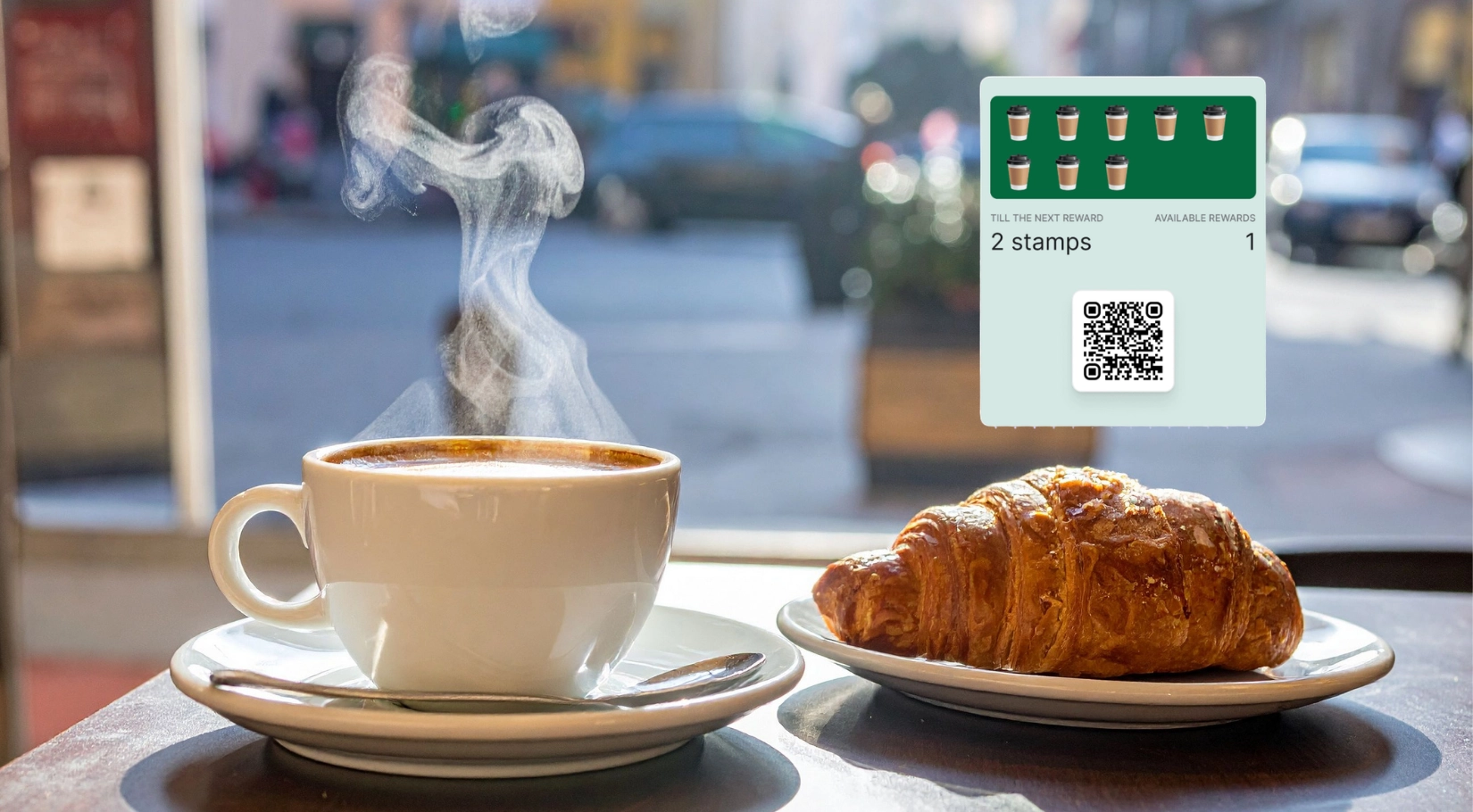
- A digital loyalty card is added to Apple Wallet or Google Wallet
- Points or stamps update automatically
- The business can send wallet-based notifications (e.g. new rewards, promos)
Why are they the best option?
- No app download needed
- Customers always have their phone with them
- Works great for high-frequency F&B and retail
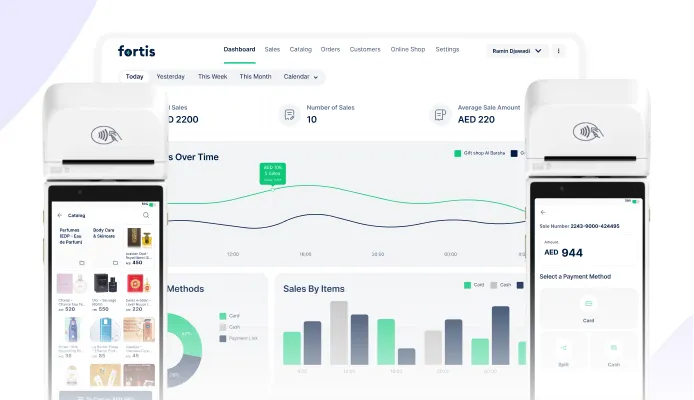
- Easy to connect to POS/payment flows
- Enables data collection and targeted messaging
This format is especially powerful when combined with points/cashback programs where 1 point = 1 AED — the value is clear and instant.
Types of loyalty cards you can create for your business
Before creating a loyalty card, it’s important to choose the right type based on how your customers buy and how often they visit. Not all loyalty cards work the same way, and the best option depends on your business model.
1. Stamp-Based Loyalty Cards
Stamp-based loyalty cards are the most familiar type. Customers earn one stamp for each visit or purchase, and after collecting a set number of stamps, they receive a reward.
Best for:
Cafés, bakeries, quick-service restaurants, car washes
Example:
Buy 9 coffees, get the 10th free
Why it works:
- Simple and easy to understand
- Clear progress toward a reward
- Encourages frequent repeat visits
2. Points-Based Loyalty Cards
With points-based loyalty cards, customers earn points based on how much they spend. Points can later be redeemed for discounts, free items, or vouchers.
Best for:
Restaurants, retail stores, salons
Example:
Earn 1 point for every AED 10 spent
Why it works:
- Rewards both small and large purchases
- Flexible reward options
- Easy to scale as your business grows
How to Make a Loyalty Card Step by Step Easily with the Fortis Loyalty Program?
Creating a digital loyalty card is actually much simpler than you think. With the Fortis loyalty program, you can create your own digital loyalty card within minutes.
Step 1: Choose the core mechanic
The first step in creating a loyalty card is choosing how customers will earn rewards. This decision shapes how your loyalty program works and how easy it is for customers to understand and use.
Stamp-based loyalty is simple, visual, and motivating. Customers can instantly see their progress, which encourages them to return sooner to complete the card.
Points loyalty cards, on the other hand, are better suited for businesses where spending amounts vary. Instead of rewarding visits, customers earn points based on how much they spend.
Step 2: Define your earn and reward logic
One of the most important parts of creating a loyalty card is defining how rewards are earned and redeemed because the right reward logic keeps customers motivated while staying sustainable for your business.
For Stamp-Based Loyalty Cards
Stamp-based programs work best when rewards feel achievable and clearly defined. For stamps, start by deciding:
- How many stamps for a reward? Too few stamps can make the reward feel insignificant, while too many can reduce motivation. A good balance encourages repeat visits without making customers feel like the reward is too far away.
- What the reward will be: The reward should be something customers genuinely value but that also makes business sense for you. Common rewards include a free item, a complimentary upgrade, or a discount on their next visit. Ideally, the reward should be tied to one of your popular or high-margin items so it feels generous without cutting deeply into profits.
For Points or Cashback Loyalty Cards
Points cards offer more flexibility and are ideal when customer spending varies.
The first decision is the earn rate: how many points or how much cashback customers receive for each purchase. Common rates range from 3% to 7% of the bill, depending on your margins and goals. Keeping the value simple and transparent, such as 1 point = 1 AED, makes the program easy to understand and trust.
Next, decide whether there should be a minimum balance required to redeem rewards. Some businesses allow customers to redeem points anytime, while others set a small threshold to encourage repeat visits. The goal is to create momentum, not friction.
You can also add tiered earnings for your most loyal customers. For example, regular customers might earn 5% cashback, while high-spending or long-term customers earn 7%. This allows you to reward loyalty more generously over time without changing the core structure of your program.
Step 3: Design the card
When creating a digital loyalty card, simplicity matters. A digital wallet card should look familiar, on-brand, and easy to understand at a glance.
With Fortis, you can easily customize your digital wallet loyalty card using your own logo and brand colors, so it feels like a natural extension of your business. There’s no need for complex design work or technical setup—your loyalty card can be fully branded in just a few steps.
It’s also important to display key information customers care about:
- Your store name, so the card is instantly recognizable
- The customer’s points or cashback balance, updated automatically
- A short, clear explanation of how the loyalty program works
A simple line like:
“Earn points. 1 point = 1 AED.”
makes the value immediately clear. Customers don’t need explanations or fine print,they instantly understand what their rewards are worth and why it’s worth coming back.
Step 4: Define the enrollment touchpoints
Once you have designed the card, you need to think about how customers can join it. Think about all the moments where a customer interacts with your business and make enrollment available at those touchpoints.
With Fortis loyalty program, you can enroll customers through two ways:
- From your POS machine: All you need to do is add their phone number to the POS machine and they will get the card that they can add to their wallets.
- With a QR code: You can also place QR codes on tables, counters, and takeaway packaging to create a self-serve way for customers to join. While waiting for their order or after receiving their food, customers can scan the QR code and sign up on their own, without needing staff assistance.
Final Thoughts: Simple, Transparent Loyalty Wins
A loyalty card is one of the most effective ways to retain customers and stay top of mind, especially when you create a digital loyalty card because it lives directly in your customers’ wallets and allows you to reach them with push notifications at the right moments.
The key to creating your own digital loyalty card is to start simple. Launch a card that’s easy to understand, easy to use, and works seamlessly at checkout. Once it’s live, you can observe how customers use it and gradually refine rewards or earning rules over time.
When done right, a digital loyalty card quietly influences customer behavior. It encourages customers to choose you more often, spend a little more on each visit, and keep coming back, without relying on constant discounts or complicated systems.