.svg)


.svg)

.jpeg)


[[shortcode1 title="Quick Answer:" description="Full vs Simplified Tax Invoice rules in the UAE depend first on the recipient’s VAT status. If you are not VAT-registered, you may issue a Simplified Tax Invoice. If you are VAT-registered, you can use the simplified format when the consideration is AED 10,000 or less. Above that amount, you need to issue a full tax invoice. Reverse-charge supplies follow separate rules."]]
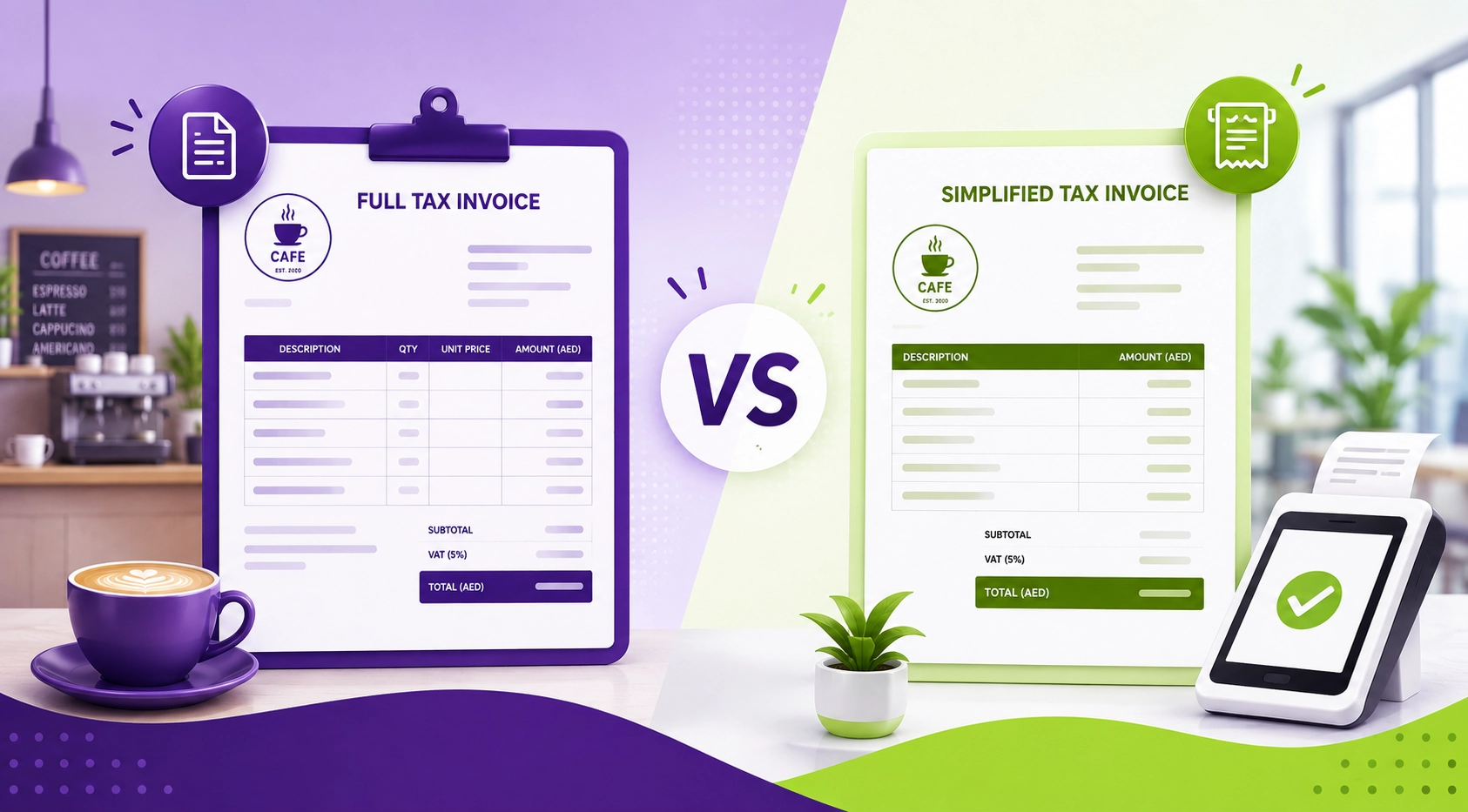
For many UAE businesses, the difficult question is not what a tax invoice is, but which format applies to the transaction in front of them. Invoicing becomes particularly important for UAE businesses handling a mix of walk-in sales and corporate purchases. Two transactions processed through the same checkout may require different invoice decisions depending on whether the recipient is VAT-registered and, where relevant, the value of the supply. In this blog, you will understand the difference between full versus simplified invoice.
Full or Simplified Tax Invoice? Start With These Questions
You can reduce most Full vs Simplified Tax Invoice decisions to three checks:
For most day-to-day transactions, the decision is therefore: recipient VAT status first, transaction value second.
The order matters.
Do not look at transaction value first. The AED 10,000 threshold becomes relevant when the recipient is VAT-registered.
For example, an individual purchasing AED 40,000 of goods is not automatically pushed into the Full Tax Invoice category simply because the transaction exceeds AED 10,000. The FTA's own guidance uses this type of example to demonstrate why recipient status must be checked first.
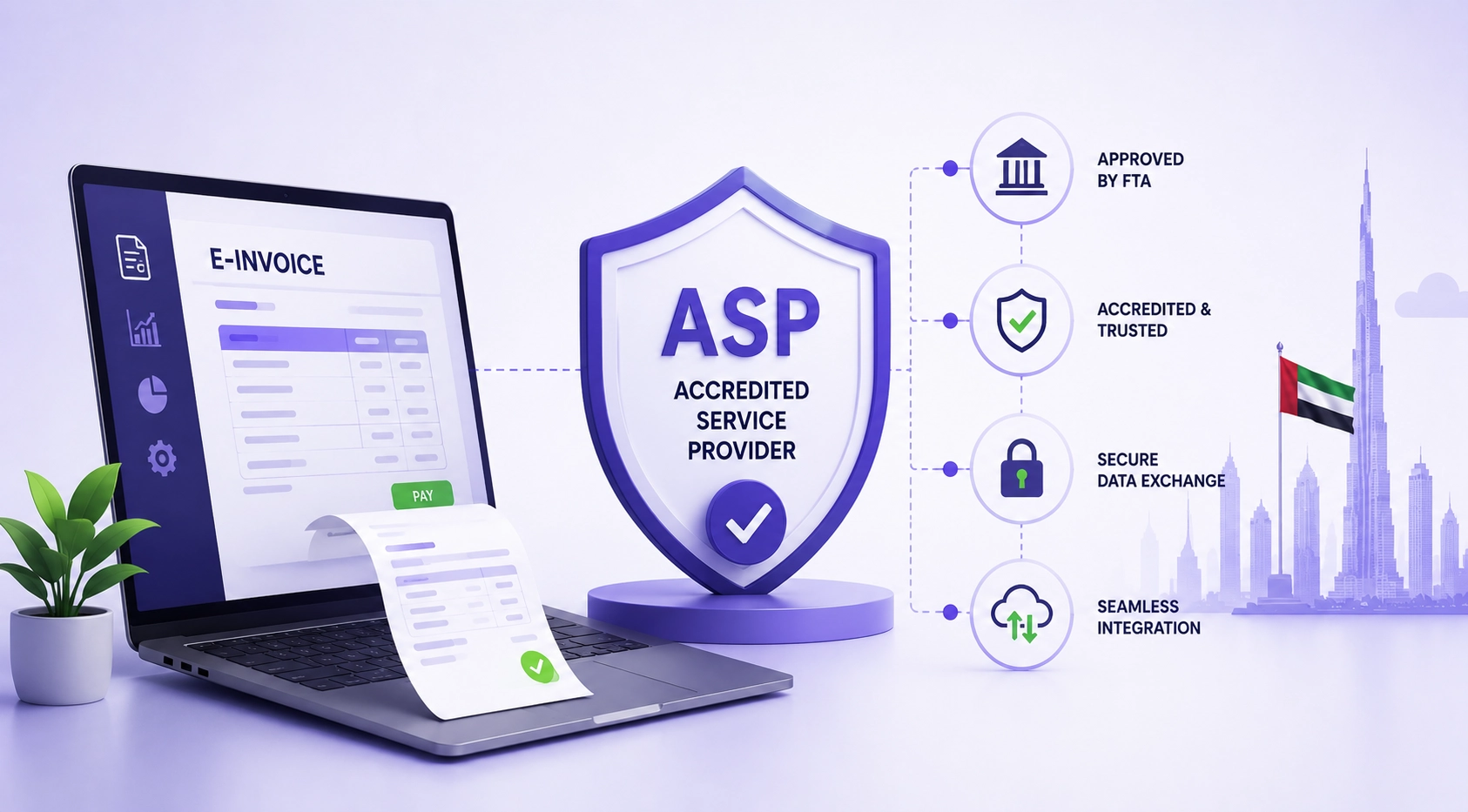
Important: Where Electronic Tax Invoice rules apply, the Simplified Tax Invoice provisions discussed here may no longer apply. Businesses within those rules should check the applicable UAE e-invoicing requirements separately.
When Is a Full Tax Invoice Required?
For the transactions covered by the standard Full-versus-Simplified framework, a Full Tax Invoice becomes necessary when the conditions allowing the simplified format are not met.
The most straightforward example is a sale to a VAT-registered recipient where the consideration exceeds AED 10,000. The simplified exception no longer applies, so the Full Tax Invoice requirements apply.
A Full Tax Invoice is also required where the reverse charge mechanism applies. Article 59 specifically excludes those transactions from the simplified-invoice exception.
Importantly, full is not restricted to transactions where it is mandatory. The UAE VAT Executive Regulation establishes the Full Tax Invoice requirements as the standard rule and then allows a Simplified Tax Invoice as an exception in specified circumstances, which means you can still issue a Full Tax Invoice when the transaction qualifies for the simplified option.
When Can You Use a Simplified Tax Invoice Instead?
Under current FTA rules, a Simplified Tax Invoice may be used in either of these situations:
- The recipient is not registered for VAT; or
- The recipient is registered for VAT, but the consideration for the supply is AED 10,000 or less.
The wording “AED 10,000 or less” matters. A qualifying transaction of exactly AED 10,000 is within the simplified-invoice threshold.
There is no AED 10,000 ceiling stated for the first situation. If the recipient is not VAT-registered, exceeding AED 10,000 does not by itself remove the simplified option.
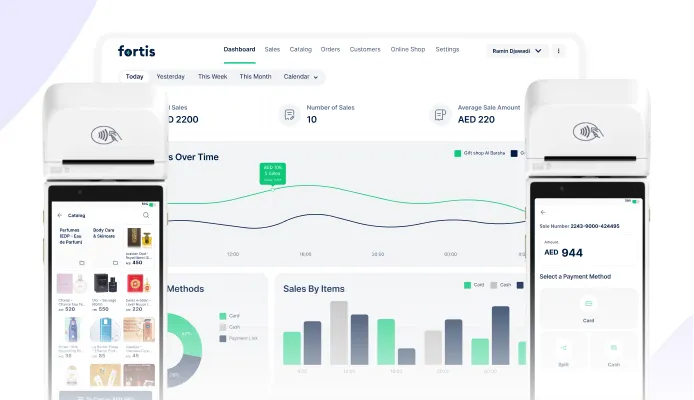
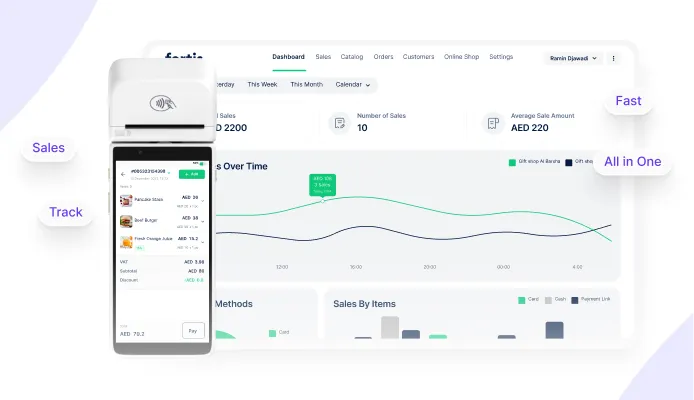
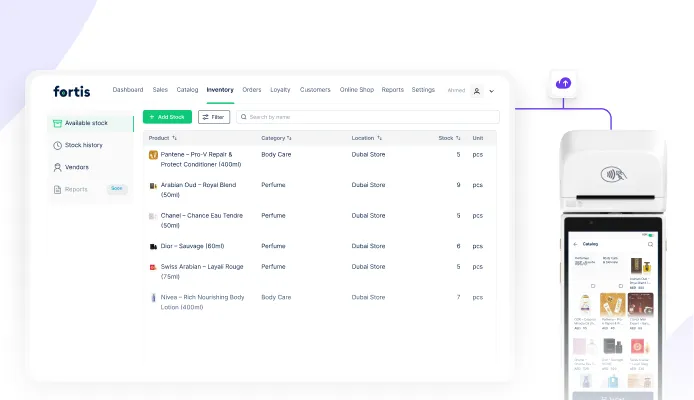
Simplified invoices are not that difficult. You can even issue them from your POS. For example, if you have Fortis SmartPOS installed on your card machine, you can issue it directly from your card machine.
For the detailed format and information required on the document itself, see Simplified Tax Invoice Format in UAE: What It Must Include.
Full vs Simplified Tax Invoice by Transaction Scenario
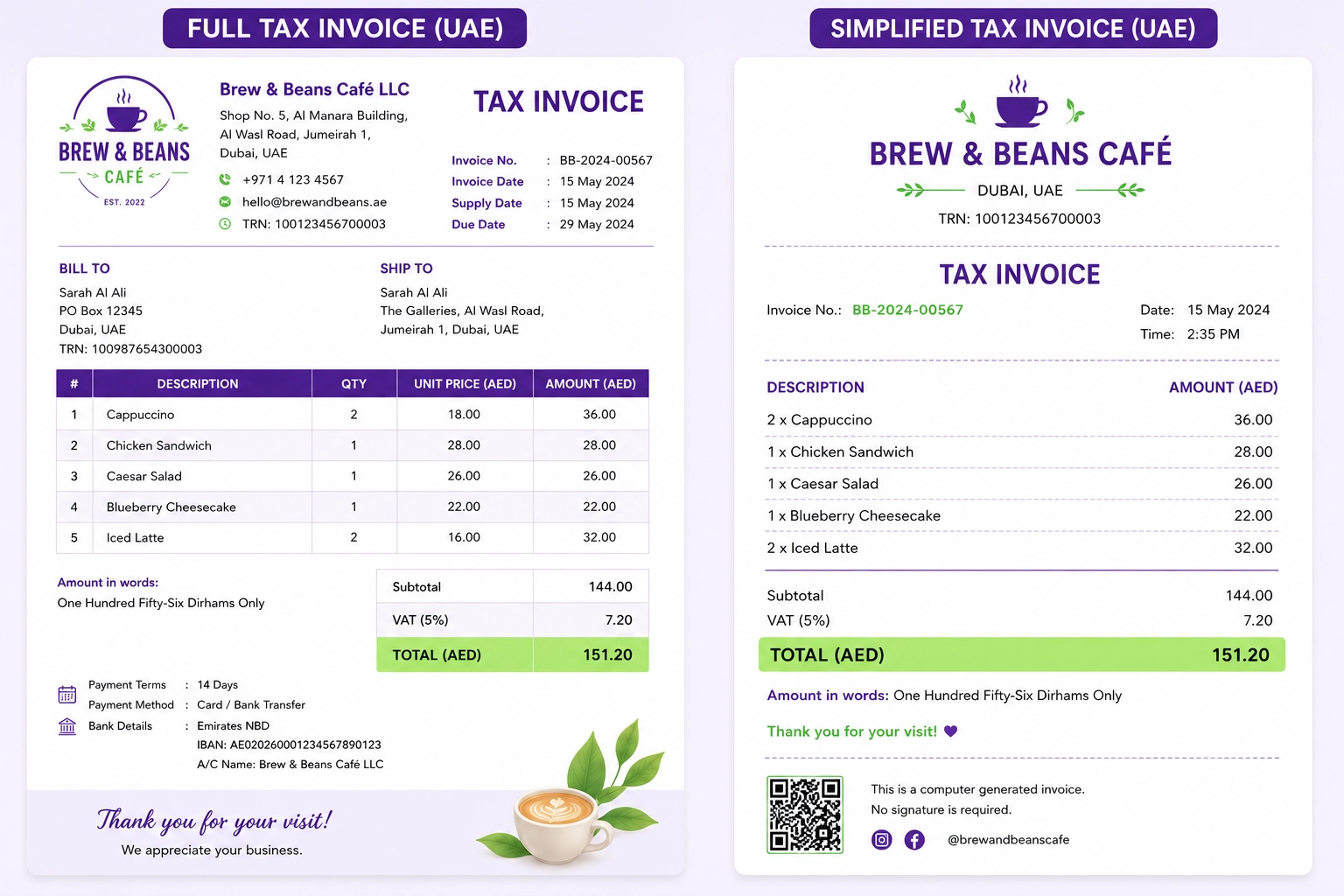
The easiest way to apply the rule is to test it against the transaction in front of you.
This distinction is particularly useful for a retailer serving a mixture of individual and corporate customers. Your retail POS system may sit at the centre of the sales workflow, but the invoice decision still depends on the circumstances of the transaction rather than the sale value alone.
Does the Customer's VAT Status Change the Invoice You Need?
Yes. The recipient's VAT-registration status is the first decision point, but it is not always the only one.
If the recipient is not VAT-registered, a Simplified Tax Invoice may be used without applying the AED 10,000 threshold. If the recipient is VAT-registered, check the consideration next: AED 10,000 or less may qualify for Simplified, while a higher amount requires Full.
For businesses serving both walk-in and corporate customers through the same point-of-sale system, this means two transactions of the same value can lead to different invoice decisions depending on the recipient's VAT status.
Does the Transaction Value Change the Invoice Type?
Yes, but the AED 10,000 threshold is not a universal limit for every Simplified Tax Invoice.
If the recipient is VAT-registered, transaction value becomes part of the decision. A Simplified Tax Invoice may be used where the consideration is AED 10,000 or less. If it exceeds AED 10,000, the simplified option is no longer available.
If the recipient is not VAT-registered, however, exceeding AED 10,000 does not by itself require a Full Tax Invoice. The simplified-invoice rule does not apply the AED 10,000 ceiling to this scenario.
This is why the correct order is recipient VAT status first, transaction value second. Do not decide between Full and Simplified based on the transaction amount alone.
What If the Customer Requests a Different Tax Invoice?
If a transaction qualifies for a Simplified Tax Invoice, using the Full Tax Invoice format instead remains an option under the standard Article 59 requirements, which means a business can issue Full where Simplified would otherwise be permitted.
The reverse does not apply. A customer request cannot make the simplified format available when the legal conditions are not met. For example, if a VAT-registered business makes a purchase above AED 10,000, requesting a Simplified Tax Invoice does not change the required format.
For businesses serving corporate customers, identifying invoicing requirements early in the sales process can help avoid unnecessary back-and-forth after the transaction.
A Simple Full vs Simplified Invoice Decision Checklist
Before choosing the invoice format:
- Confirm the recipient's VAT status. Establish whether the recipient is VAT-registered.
- If the recipient is VAT-registered, check the consideration. AED 10,000 or less may qualify for Simplified; above AED 10,000 requires Full.
- Check for an applicable exclusion. Do not use the simplified option where the reverse charge exclusion applies.
- If Simplified is permitted, decide whether Full is still preferable. The simplified format is an option in qualifying transactions, not a requirement to use it.
In practice, start by confirming the recipient's VAT status, then check the transaction conditions before choosing the permitted invoice format.
Make the Right Invoice Part of the Right Sales Workflow
Choosing between Full and Simplified invoice starts with the transaction in front of you: confirm the recipient's VAT status, apply the AED 10,000 threshold where relevant, and use the invoice format permitted under UAE VAT rules.
Frequently Asked Questions
1. Is AED 10,000 the maximum value for every Simplified Tax Invoice in the UAE?
No. The AED 10,000 threshold applies when the recipient is VAT-registered. If the recipient is not VAT-registered, Article 59 permits a Simplified Tax Invoice without applying that value ceiling.
2. Can I issue a Full Tax Invoice if a Simplified Tax Invoice is allowed?
Yes. The UAE VAT rules permit Simplified Tax Invoices as an exception to the Full Tax Invoice requirements in qualifying situations. You can use the Full format instead where it better suits the transaction.
3. What should I do if a business customer asks for a Full Tax Invoice?
You can issue a Full Tax Invoice even when the transaction qualifies for the simplified format. If your business regularly serves corporate customers, establish their invoice requirements early in the sales process so your team can use the appropriate format.
4. What should I check if my business serves both B2C and B2B customers?
Do not configure your operating process around transaction value alone. Your team should be able to distinguish VAT-registered recipients from non-registered recipients and then apply the AED 10,000 test where relevant.
5. Do I need different POS hardware for Full and Simplified Tax Invoice scenarios?
No UAE VAT rule requires separate POS hardware simply because the invoice scenario changes. Check which invoice formats your existing software supports before changing hardware; Fortis SmartPOS, for example, supports FTA-compliant Simplified Tax Invoices within the sales workflow.