.svg)


.svg)

.jpeg)


[[shortcode1 title="Quick Answer:" description="A contactless payment is a card or digital wallet payment completed by tapping a contactless-enabled card, smartphone, smartwatch, or other NFC-enabled device on a compatible payment terminal. Instead of inserting a card, the transaction is processed using Near Field Communication (NFC) technology, allowing payments to be completed within seconds."]]
Today, contactless payments are accepted across most retail stores, restaurants, cafés, supermarkets, pharmacies, and service businesses in the UAE. Customers can pay using contactless debit or credit cards, as well as digital wallets such as Apple Pay, Google Pay, and Samsung Wallet. Depending on the transaction value and the card issuer's security policies, some payments may require PIN or biometric verification.
According to Mastercard, contactless payments now account for more than two in every three in-person transactions processed on its global network, reflecting how tap-to-pay has become the preferred way to pay in many markets.
What Is a Contactless Payment?
A contactless payment is an in-person payment made by holding a payment card or digital wallet close to a compatible payment terminal instead of inserting or swiping a card. The payment is transmitted using Near Field Communication (NFC), allowing transactions to be completed within seconds. For businesses, contactless payments help speed up checkout while supporting the payment methods customers increasingly expect across retail stores, restaurants, cafés, supermarkets, pharmacies, and service businesses in the UAE.
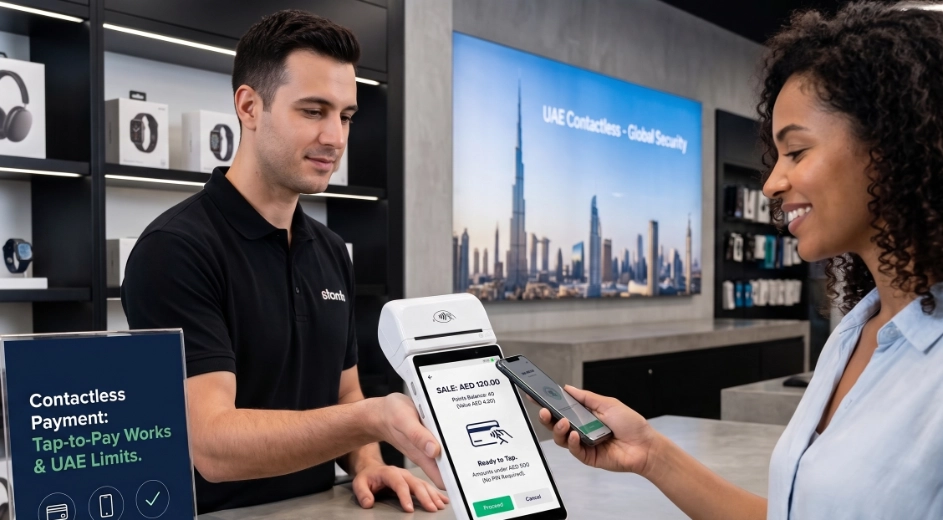
From a customer's perspective, the process is simple: unlock your phone if required, or present your contactless card, then hold it a few centimetres from the payment terminal until the transaction is approved. The payment terminal securely communicates with the card or digital wallet, authorises the transaction, and confirms the payment within a few seconds.
Businesses in the UAE can accept contactless payments through NFC-enabled payment terminals that support international card schemes and mobile wallets. Depending on the payment solution, merchants may accept payments from:
- Contactless debit cards
- Contactless credit cards
- Apple Pay
- Google Pay
- Samsung Wallet
- Compatible smartwatches and other wearable payment devices
For many businesses, especially retail stores, restaurants, cafés, and service businesses, accepting these payment methods is only part of the process. Many merchants also want every payment to be automatically recorded alongside sales, VAT receipts, and business reporting.
How Does Contactless Payment Work?
Although a contactless payment takes only a few seconds, several security checks happen in the background before the transaction is approved.
Step 1: The payment terminal detects a contactless device
When a customer holds a contactless card, smartphone, smartwatch, or other NFC-enabled device a few centimetres from a compatible payment terminal, the terminal establishes a short-range Near Field Communication (NFC) connection with the payment device. EMV Contactless technology supports both contactless payment cards and NFC-enabled mobile devices without requiring physical contact with the terminal.
Step 2: Payment credentials are securely exchanged
The payment device sends the information needed to process the transaction. For contactless cards, the embedded EMV chip generates a unique one-time cryptographic security code (cryptogram) for every payment. Because this security value is unique to each transaction, it cannot be reused to authorise another purchase.
If the customer pays with a mobile wallet such as Apple Pay, Google Pay, or Samsung Wallet, the wallet typically uses payment tokenisation. Instead of sharing the actual card number, it sends a payment token together with a unique cryptogram, helping protect the customer's card details even if payment data is intercepted or a merchant experiences a data breach.
Step 3: The transaction is authorised
The payment terminal sends the encrypted transaction through the payment network to the card issuer for authorisation. The issuer verifies the transaction details, performs fraud and risk checks, and either approves or declines the payment. This process is similar to a traditional chip card transaction, but the customer does not need to insert their card into the terminal.
Step 4: The payment is completed
If the transaction is approved, the terminal confirms the payment within a few seconds. Depending on the transaction amount, payment method, and the issuing bank's security requirements, the customer may be asked to verify the transaction by entering a PIN or completing biometric authentication before the payment is finalised.
Contactless Cards vs Mobile Wallets
Both contactless cards and mobile wallets use NFC technology to communicate with payment terminals, but they do not secure transactions in exactly the same way.
For most businesses, there is little operational difference between accepting a contactless card and a mobile wallet because both are processed through the same NFC-enabled payment terminal. The greater difference lies in how payment data is secured. When payments are integrated with a POS system, merchants can also keep sales records, payment data, and reporting together instead of managing them separately.
What Is the Contactless Payment Limit in the UAE?
One of the most common questions businesses and consumers ask is whether there is a contactless payment limit in the UAE. The answer depends on the type of limit being discussed.
Many people use the term contactless payment limit to refer to the maximum amount that can be paid by tapping a card or mobile device. In practice, payment networks distinguish this from the Cardholder Verification Method (CVM) limit, which is the amount above which the cardholder must verify the transaction by entering a PIN or using another authentication method.
In 2020, the UAE Central Bank approved an increase in the PIN-free contactless verification limit from AED 300 to AED 500. Visa and Mastercard worked with banks and merchants to implement the updated limit across the UAE, allowing larger everyday purchases to be completed without entering a PIN where applicable.
This does not mean that contactless payments are limited to AED 500. Transactions above the applicable CVM limit can still be completed using contactless technology, but the customer may be asked to verify their identity by entering a PIN or using biometric authentication, depending on the payment method and the issuing bank's security policies.
Banks may also apply additional fraud prevention measures, such as requesting verification after multiple consecutive contactless transactions or after cumulative spending reaches an internal security threshold. These controls vary between card issuers and are designed to reduce fraud while maintaining a fast checkout experience.
Is Contactless Payment Safe?
Yes. Contactless payments use the same EMV security standards as chip card transactions and include multiple layers of protection to help reduce payment fraud.
For contactless cards, every transaction generates a unique cryptographic code that cannot be reused for another purchase. Even if transaction data were intercepted, it could not simply be replayed to authorise another payment.
Mobile wallets add another layer of security through payment tokenisation. Instead of transmitting the actual card number, services such as Apple Pay and Google Pay use a payment token that represents the card during the transaction. Many mobile wallets also require biometric authentication or a device passcode before payment, helping protect purchases if the device is lost or stolen.
Payment networks also include safeguards against duplicate transactions. If a customer accidentally taps the payment terminal twice during the same purchase, the technology is designed to prevent duplicate billing for the same transaction.
Why Was My Contactless Payment Declined?
A declined contactless payment does not necessarily mean there is a problem with the card. In many cases, the payment terminal or issuing bank is simply requesting additional verification.
Common reasons include:
- The transaction requires PIN or biometric verification because it exceeds the applicable verification threshold.
- The issuing bank has requested additional authentication as part of its fraud prevention process.
- The card has not yet been activated for contactless payments.
- The payment terminal does not support contactless transactions.
- There is a temporary network or authorisation issue between the merchant and the card issuer.
In most cases, inserting the card into the terminal and completing a chip-and-PIN transaction successfully resets the payment process, after which contactless payments can continue as normal, subject to the issuing bank's security policies.
Where Can Businesses Accept Contactless Payments?
Any business with an NFC-enabled payment terminal can accept contactless payments from compatible debit cards, credit cards, smartphones, smartwatches, and other supported devices. Today, contactless acceptance is common across retail stores, restaurants, cafés, supermarkets, pharmacies, hotels, service businesses, and many transportation services.
Customers can typically pay using a contactless card or a digital wallet such as Apple Pay, Google Pay, or Samsung Wallet without changing the merchant's existing payment workflow. The payment is processed through the same acquiring and card network infrastructure used for chip card transactions
For businesses, enabling contactless payments usually requires a payment terminal that supports NFC technology. Once enabled, the same terminal can accept both physical contactless cards and compatible mobile wallets without requiring separate hardware for each payment method.
Benefits of Contactless Payments for Businesses
For businesses, the value of contactless payments extends beyond giving customers another way to pay. Faster transactions can improve the checkout experience, reduce queues during busy periods, and help staff serve more customers efficiently.
One of the biggest advantages is speed. Mastercard states that contactless payments can be completed up to ten times faster than other face-to-face payment methods, helping reduce queues during peak trading periods. The company also reports that approximately 70% of in-person Mastercard transactions globally are now contactless, demonstrating how widely the payment method has been adopted.
Businesses may also benefit from:
- Faster customer throughput during peak hours.
- Support for both physical cards and digital wallets using the same payment terminal.
- Reduced cash handling and the operational costs associated with counting, storing, and transporting cash.
- EMV-based payment security for contactless card transactions.
- A payment experience that aligns with customer expectations as digital wallet usage continues to grow.
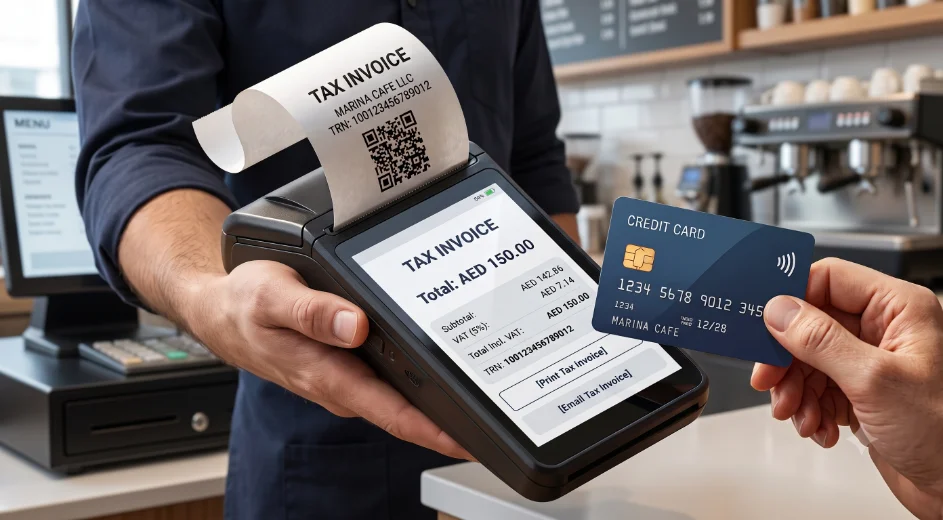
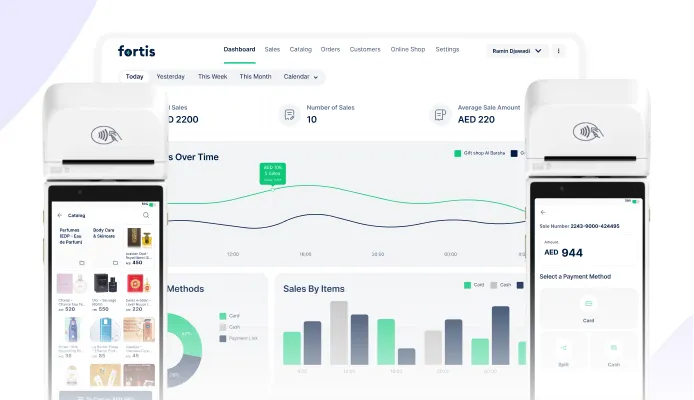
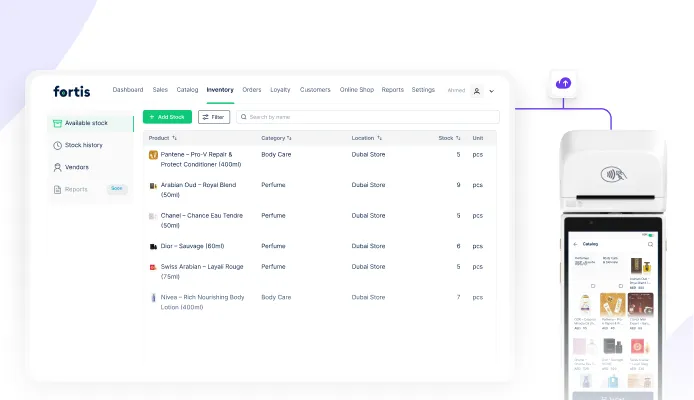
The operational benefits increase when contactless payments are integrated with a POS system rather than operating as a standalone payment terminal. Instead of managing payments separately, businesses can automatically record sales, issue VAT-compliant receipts, reconcile transactions, update inventory, and access business reporting through the same workflow. This is particularly valuable for retail stores, restaurants, cafés, and other service businesses that process a high volume of transactions each day.
Contactless Payment vs Chip and PIN
Whether a customer taps a card or inserts it into the payment terminal, both methods use EMV technology to process secure card payments. The main difference lies in how the transaction is completed at checkout.
For merchants, both payment methods provide secure electronic payment acceptance. The payment terminal automatically determines the appropriate transaction flow and requests additional verification whenever required by the card issuer or payment network.
Final Thoughts
Contactless payments have become the standard way many customers choose to pay in the UAE. For businesses, however, accepting tap-to-pay is only one part of running an efficient operation. Managing sales, payments, VAT-compliant receipts, inventory, and reporting through separate systems can quickly become difficult as the business grows.
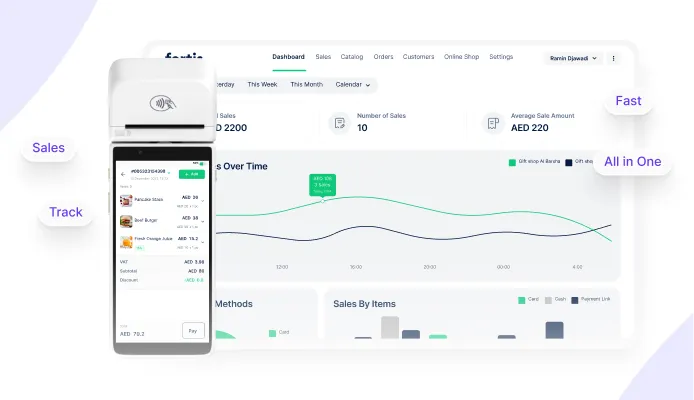
Fortis SmartPOS helps bring these operations together by combining contactless payment acceptance with POS capabilities in a single solution. Whether you run a retail store, restaurant, café, salon, or another service business, you can accept modern payment methods while keeping your day-to-day operations connected through one platform.
Explore Fortis SmartPOS to see how your business can simplify payment acceptance and everyday operations with one integrated solution.
Frequently Asked Questions
What is the difference between a contactless payment and a contactless card?
A contactless payment is the payment method itself, while a contactless card is one of the devices that can be used to make that payment. Contactless payments can also be made using smartphones, smartwatches, and other compatible NFC-enabled devices.
What is the contactless payment limit in the UAE?
The UAE's widely referenced AED 500 threshold relates to the PIN-free cardholder verification limit, not the maximum amount that can be paid using contactless technology. Higher-value transactions can still be completed by tapping a card or device, although the customer may be asked to enter a PIN or complete biometric authentication.
Can businesses accept both contactless cards and mobile wallets?
Yes. Businesses with an NFC-enabled payment terminal can generally accept contactless debit cards, credit cards, Apple Pay, Google Pay, Samsung Wallet, and other compatible digital wallets without requiring separate payment hardware.
Why does my contactless card sometimes ask for a PIN?
The issuing bank may require additional verification because the transaction exceeds the applicable verification threshold or because its fraud prevention systems have requested cardholder authentication. This is a normal security measure and does not necessarily indicate a problem with the card.
Do businesses need a special payment terminal to accept contactless payments?
Businesses need a payment terminal that supports Near Field Communication (NFC). Once NFC is enabled, the same terminal can usually accept both contactless cards and compatible mobile wallets without changing the payment process.